Modeling the Tumor Microenvironment: How AI and Virtual Populations are Revolutionizing Cancer Research

Understanding the Tumor Microenvironment (TME): A New Frontier in Cancer Treatment
Is the future of cancer treatment already here, hidden within the tumor itself? It might be, with the increasing focus on understanding the tumor microenvironment (TME).
Defining the TME
The tumor microenvironment isn't just about cancer cells. It’s a complex ecosystem surrounding the tumor. Cancer cells interact with:- Immune cells
- Stromal cells (like fibroblasts)
- Extracellular matrix (ECM)
Limits of Traditional Models
Traditional in vitro (test tube) and in vivo (animal) models often fail to capture the TME's complexity.They oversimplify the intricate interactions within the tumor's environment.
This simplification leads to:
- Inaccurate predictions of drug responses
- Failure to translate preclinical success to clinical settings
Limitations of Current Modeling
Current TME modeling techniques face challenges. Scalability and personalization are key limitations. There's a need for solutions that can:- Adapt to individual patient profiles
- Efficiently handle large datasets
- Accurately simulate cell interactions and signaling pathways
The Interplay Within
The TME involves a dynamic dialogue. Cancer cells, immune cells, stromal cells, and the extracellular matrix all contribute. It's a push and pull:- Cancer cells recruit and manipulate other cells.
- Immune cells can either attack or promote tumor growth.
- Stromal cells provide structural support and secrete growth factors.
Signaling Pathways and Molecular Mechanisms
Signaling pathways within the TME regulate tumor behavior. Growth factors, cytokines, and chemokines influence:- Cell proliferation
- Angiogenesis (blood vessel formation)
- Immune evasion
- Metastasis
Cancer research just got a whole lot smarter, thanks to AI.
GigaTIME: The AI-Powered Approach to Scalable TME Modeling
GigaTIME is a platform that is revolutionizing cancer research. It uses AI to generate virtual patient populations for Tumor Microenvironment (TME) modeling. This allows researchers to test hypotheses and accelerate drug discovery.
Multimodal AI for Realistic Virtual Patients
GigaTIME leverages multimodal AI to integrate diverse data sources. This includes genomics, imaging, and clinical data. This integration creates realistic virtual patients that mirror the complexity of real-world cancer cases.
GigaTIME: Creating virtual patient populations that accelerate cancer research.
Key Components and Workflow
The platform includes:
- Data Integration Module: This combines various datasets into a unified format.
- Virtual Patient Generator: It creates realistic patient models using AI algorithms.
- Simulation Engine: It simulates TME dynamics and treatment responses.
- Analysis Tools: These tools analyze simulation results and identify potential drug targets.
Advantages Over Traditional Methods
GigaTIME offers several advantages:
- Scalability: GigaTIME models populations at scales traditional methods can't.
- Cost-Effectiveness: It reduces the need for expensive in vivo experiments.
- Personalization: Enables personalized treatment strategies based on individual patient characteristics.
Accelerating Drug Discovery
Ultimately, GigaTIME has the potential to significantly accelerate drug discovery. By providing a scalable, cost-effective, and personalized approach to TME modeling, researchers can identify promising drug candidates more efficiently. This can bring new cancer treatments to patients faster than ever before. Explore our Scientific Research AI Tools for similar solutions.
Here's how AI is fighting cancer with virtual populations.
The Science Behind GigaTIME: Multimodal AI and Virtual Population Generation
How can we truly understand the complex tumor microenvironment? GigaTIME provides a new approach for modeling the tumor microenvironment. This innovative tool combines multimodal AI and virtual population generation.
Algorithmic Deep Dive
GigaTIME leverages advanced AI algorithms. Machine learning models analyze extensive datasets. These algorithms synthesize patient data reflecting real-world diversity. They learn patterns from clinical trials, genomic data, and imaging studies.
Generative AI for Synthetic Data
Generative AI creates synthetic patient data. This synthetic data accurately represents real-world populations. The generative AI produces diverse patient profiles.
This includes variations in age, genetic background, and disease progression.
Validation Methods
Rigorous validation ensures accuracy.
- Statistical analysis compares real-world data.
- Clinical experts review the virtual populations.
- Model predictions are tested against known treatment outcomes.
Ethical and Privacy Considerations
Ethical considerations are paramount in medical research. Data privacy challenges are addressed with robust security measures. GigaTIME employs de-identification techniques. This approach ensures patient privacy while maximizing data utility. Learn more about AI safety.
Addressing Biases
Biases in training data can skew outcomes. GigaTIME uses bias detection algorithms. It also incorporates diverse datasets. These datasets ensure equitable outcomes across various demographics. Bias in AI is a key area for ethical AI development.
GigaTIME represents a paradigm shift in cancer research. By combining AI and virtual populations, scientists can accelerate discovery and improve patient outcomes. Explore other scientific research tools on our site.
Cancer research is undergoing a dramatic transformation thanks to AI.
Real-World Impact of GigaTIME
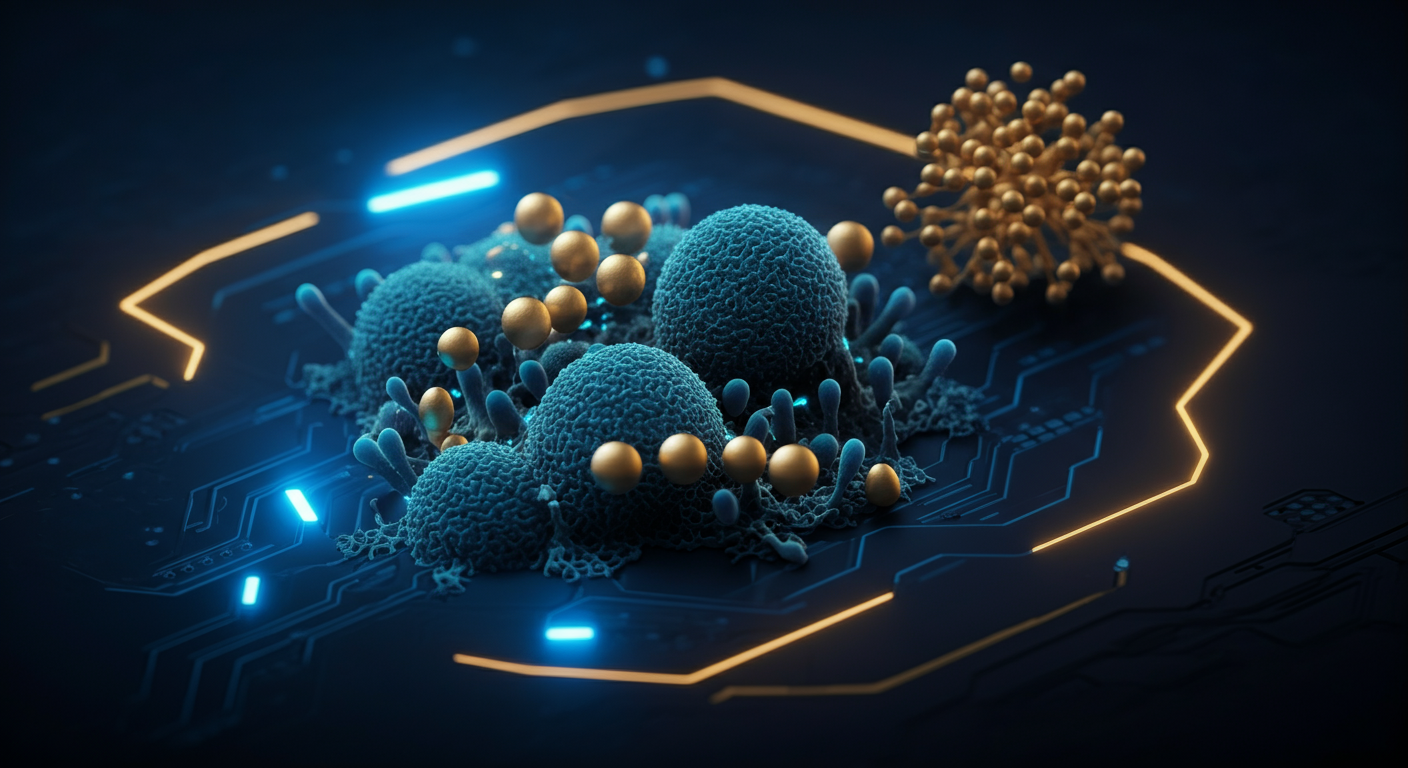
GigaTIME is accelerating cancer research by providing scientists with a more accurate and comprehensive way to model the tumor microenvironment (TME). This AI-driven approach is impacting everything from drug discovery to personalized medicine. For example, researchers are using GigaTIME to:
- Predict drug efficacy, minimizing wasted resources on ineffective treatments.
- Identify novel drug targets by analyzing complex interactions within the TME.
- Develop new immunotherapies tailored to specific tumor characteristics.
Identifying Drug Targets and Predicting Treatment Response
The ability of GigaTIME to model the TME allows for identification of drug targets that were previously unidentifiable. By simulating the effects of different drugs on virtual populations of cancer cells, researchers can predict treatment response with greater accuracy. This can lead to:- Faster drug development cycles.
- More effective clinical trials.
- Reduced costs associated with failed treatments.
Personalizing Cancer Treatment
One of the most promising applications of GigaTIME is its potential to personalize cancer treatment. By incorporating individual patient characteristics into the TME model, clinicians can predict how a patient's cancer will respond to specific therapies. This personalized approach can lead to:- Improved treatment outcomes.
- Reduced side effects.
- Better quality of life for cancer patients.
Developing Immunotherapies and Targeted Therapies
GigaTIME plays a crucial role in developing new immunotherapies and targeted therapies. The AI-powered models help researchers understand how the immune system interacts with the tumor. Furthermore, scientists can optimize targeted therapies to selectively kill cancer cells while sparing healthy tissue.Future Applications: Predicting Metastasis and Recurrence
Looking ahead, AI-driven TME models hold the key to predicting metastasis and recurrence. These models could identify patients at high risk, enabling early intervention and potentially preventing cancer from spreading or returning. Explore our Scientific Research tools for more insights.Addressing the Tumor Microenvironment (TME) with AI is no easy feat, but the potential rewards are immense.
Data Integration and Model Validation
Integrating diverse data types (genomic, proteomic, imaging) is a significant hurdle. Standardizing data formats and ensuring compatibility are crucial for reliable AI models. Validation is equally vital.
- Challenge: Ensuring that AI-driven predictions align with real-world observations.
- Solution: Rigorous testing using independent datasets and experimental validation.
- Example: Combining GigaTIME, a term representing data-richness in time, with experimental data.
Standardization and Collaboration
Collaboration is key to progress in AI-driven TME modeling.
Shared datasets, standardized protocols, and open-source tools can accelerate discovery. A collaborative approach fosters trust and ensures reproducibility. Standardization can be aided by exploring best practices with AI Observability.
Combining Technologies for Personalized Models
The future lies in integrating AI with other cutting-edge technologies. Combining GigaTIME with CRISPR or organ-on-a-chip could lead to more sophisticated and personalized models. These models can then accurately predict treatment responses.
Explainable AI (XAI)
Building trust in AI-driven cancer research requires transparency. Explainable AI (XAI) helps researchers understand how AI models arrive at their conclusions. XAI fosters confidence in AI's potential for clinical translation.
Data integration, standardization, and explainability will drive the future of AI in TME modeling. Explore our scientific research tools to learn more.
Here's how AI and virtual populations could revolutionize cancer research.
The Impact of GigaTIME on the Future of Cancer Research and Treatment
Could AI truly democratize cancer research and pave the way for personalized medicine? GigaTIME, or Genome-scale Integrated Analysis of the Tumor Microenvironment, offers a powerful glimpse into this future.
What is GigaTIME?
GigaTIME is an AI-driven modeling system. It creates virtual populations that accurately simulate the complex interactions within a tumor microenvironment. It serves as a tool making cancer research more accessible to researchers.
Key Benefits of GigaTIME

- Accelerated Discovery: GigaTIME drastically reduces the time needed to test hypotheses. This acceleration is achieved through efficient computational modeling.
- Personalized Treatment Strategies: Simulate how different treatments will affect individual patients. This allows for tailored therapies that maximize effectiveness.
"GigaTIME represents a paradigm shift in cancer research," says Dr. Anya Sharma, lead developer. "It enables us to explore treatment options in silico before even considering in vivo studies."
Broader Implications
AI-driven modeling is not just for cancer. It could revolutionize research across medical fields. Consider applications for neurological disorders, infectious diseases, and even drug discovery.
Investing in the Future
Continued investment in AI and computational biology is vital. The long-term vision involves personalized cancer treatment. Learn more about AI on our site. This treatment will be optimized for each patient's unique genetic makeup.
Imagine a future where AI tools like GigaTIME are commonplace. Researchers across the globe have access. This democratizes cancer research. Explore our Scientific Research tools for similar solutions.
Cancer research is expensive and time-consuming; AI could provide a massive boost.
Publicly Available Datasets and Resources
Researchers diving into Tumor Microenvironment (TME) modeling can leverage several publicly available datasets. These resources offer crucial insights. The Cancer Genome Atlas (TCGA) provides comprehensive genomic data. Gene Expression Omnibus (GEO) hosts gene expression profiles. These datasets enable the training and validation of AI models for TME analysis.Software Tools and Platforms
Several software tools are revolutionizing AI-driven modeling.- GigaTIME is a valuable technology.
- Platforms like best-ai-tools.org aggregate AI tools.
Tips for Incorporating AI into TME Studies
- Start with well-defined research questions.
- Use high-quality, curated datasets.
- Focus on interpretable AI models to ensure biological relevance.
- Clearly document all steps.
Relevant Publications and Research Articles
Explore publications related to GigaTIME. Also look for articles discussing AI applications in cancer research. This allows researchers to stay current with the field.Collaboration and Training Opportunities
Engage with the AI community. Attend workshops. Consider collaborating with data scientists to gain needed skills. Search for specialized training programs. This can increase understanding in the field.In short, combining publicly available resources, the right tools, and collaborative spirit can help researchers make new discoveries in AI-driven TME modeling. Explore our Scientific Research tools today.
Keywords
tumor microenvironment modeling, AI in cancer research, virtual patient populations, GigaTIME, multimodal AI, cancer drug discovery, personalized medicine, TME modeling, AI-driven drug development, cancer treatment, in silico modeling, AI in oncology, computational biology, cancer research tools, synthetic patient data
Hashtags
#AIinCancerResearch #TumorMicroenvironment #DrugDiscovery #PersonalizedMedicine #GigaTIME
Recommended AI tools

ChatGPT
Conversational AI
AI research, productivity, and conversation—smarter thinking, deeper insights.

Perplexity
Search & Discovery
Clear answers from reliable sources, powered by AI.

Claude
Conversational AI
Your trusted AI collaborator for coding, research, productivity, and enterprise challenges

OpenClaw AI Agent
Productivity & Collaboration
The AI that actually does things.

Cursor
Code Assistance
Your coding agent for building ambitious software

DeepSeek
Conversational AI
Efficient open-weight AI models for advanced reasoning and research
About the Author

Written by
Dr. William Bobos
Dr. William Bobos (known as 'Dr. Bob') is a contributor focused on practical AI tool analysis, research context, and clear summaries for builders and decision-makers.
More from Dr.Was this article helpful?
Found outdated info or have suggestions? Send us a note.