The Artificial Intelligence Global Press Digest: April 1, 2026

The Financial Epoch: OpenAI’s 122 Billion Dollar Validation of the Intelligence Age
The global landscape of artificial intelligence reached a definitive structural turning point on April 1, 2026, as OpenAI confirmed the closing of a historic $122 billion funding round.[1, 2, 3] This capital infusion, the largest private raise in the history of technology, elevates the company’s post-money valuation to a staggering $852 billion, positioning it as one of the most valuable enterprises on the planet regardless of its private status.[4, 5, 6, 7] The funding consortium was co-led by SoftBank and Andreessen Horowitz, with participation from a global elite of institutional and strategic investors, including NVIDIA, Amazon, Microsoft, MGX, and T. Rowe Price.[3, 6, 8] Notably, the deal structure reflects the hybrid nature of the modern AI economy, with NVIDIA providing compute credits and Amazon pledging $50 billion, of which $35 billion is contingent upon OpenAI reaching milestones toward Artificial General Intelligence (AGI) or completing an Initial Public Offering (IPO).[3, 4, 7] Why this matters: This round signals that capital markets have moved beyond treating AI as a software vertical and are now financing it as the foundational infrastructure of the 21st-century global economy, comparable to the historical capitalization of the telecommunications or energy grids.

The financial metrics disclosed alongside the funding reveal a company growing at a velocity that challenges traditional economic modeling. OpenAI is currently generating approximately $2 billion in monthly revenue, a rate that is expanding four times faster than historical tech giants like Alphabet and Meta during their respective hyper-growth phases.[3, 4, 6] Enterprise revenue has become a primary engine of this growth, now accounting for 40% of the total revenue share, with internal projections suggesting it will achieve parity with the consumer segment by the end of 2026.[3, 4, 6] The consumer side remains robust, with ChatGPT serving over 900 million weekly active users and maintaining a subscriber base of more than 50 million.[5, 7, 9] However, the scale of this operation necessitates a capital expenditure that remains unprecedented; analysts estimate the company’s annual burn rate could escalate to $57 billion by 2027 as it races to secure the next generation of chips and data center capacity.[2, 3] Why this matters: The staggering revenue-to-burn ratio underscores the high-stakes nature of the AI arms race, where market leadership is maintained not through traditional profitability but through the continuous, massive-scale reinvestment in compute and talent.
A significant shift in the company’s capital strategy is the unprecedented inclusion of retail investors in this round. For the first time, OpenAI leveraged bank channels and exchange-traded funds, such as those managed by ARK Invest, to raise over $3 billion from individual investors.[3, 4, 6, 7] This move, coupled with an expansion of the company’s revolving credit facility to $4.7 billion, provides a liquidity buffer that allows the firm to remain private while satisfying the intense demand for exposure from the broader public.[6, 7, 9] Observers have noted that the level of financial disclosure provided in today’s announcement—detailing monthly token processing rates of 15 billion and the success of a $100 million annualized advertising pilot—functions essentially as a "pre-S-1" filing, preparing the markets for an IPO as early as late 2026.[3, 6, 7, 10] Why this matters: By integrating retail capital and disclosing granular growth metrics, OpenAI is attempting to build a public market narrative while still shielded by private status, effectively democratizing the "God-tier" wealth creation event that usually stays within the confines of elite venture capital.
Metric | April 1, 2026 Status | Comparison / Context |
|---|---|---|
Total Funding Round | $122 Billion | Largest private raise in history [1, 3] |
Post-Money Valuation | $852 Billion | Ranks above most S&P 500 firms [2, 3] |
Monthly Revenue | $2 Billion | 4x faster growth than Meta/Alphabet at stage [3, 4] |
Weekly Active Users | 900 Million | Nearly 12% of the global population [5, 9] |
Enterprise Revenue Share | 40% | Projected to hit 50% by year-end 2026 [4, 6] |
Retail Contribution | $3 Billion | First significant public entry into OpenAI [6, 10] |
Strategic Consolidation: The AI Superapp and the End of Sora
In a move that signals a pivot toward high-utility agentic workflows, OpenAI announced the reorganization of its product suite into a "unified AI superapp".[2, 8, 9] This platform will integrate the disparate capabilities of ChatGPT, the Codex programming tool, real-time web browsing, and autonomous agents into a single interface designed to handle complex, multi-step tasks across diverse applications.[2, 8, 9] To focus resources on this integrated platform, OpenAI has abruptly terminated its Sora video generation platform and ended its high-profile $1 billion partnership with Disney.[2, 4] This decision reflects a maturing strategic vision that prioritizes "intelligence as a service" over "creativity as a service," specifically targeting the enterprise market where the demand for automated work-life orchestration is highest.[3, 8] Why this matters: The cancellation of Sora, a project that once captured the public's imagination, indicates that the cost of compute has become so high that even a company as well-funded as OpenAI must choose between being a media tool provider or an essential infrastructure layer for the global workforce.
The development of the superapp is supported by a significant shift in infrastructure deployment. OpenAI is moving away from the single-point expansion of data centers, exemplified by the transfer of 700 MW of Phase II capacity to Microsoft, toward a diversified refined deployment model.[11] This includes deepening supply chain partnerships with SK Hynix for HBM wafers and Samsung for the "Stargate Korea" data center initiative.[11] The strategy aims to reduce dependency on any single cloud provider while optimizing the "intelligence layer" for high-volume token processing, which currently stands at 15 billion tokens per minute.[3, 7, 8] Why this matters: As AI hits physical scaling limits, the transition from "hardware stacking" to "efficiency optimization" is becoming the primary differentiator; OpenAI’s ability to manage its massive compute footprint more fluidly than its rivals will determine its long-term margin profile.
The Anthropic Crisis: The Claude Code Leak and Internal Architectures Revealed

While its rival celebrated a financial windfall, Anthropic found itself at the center of a profound security and intellectual property crisis on April 1, 2026. A routine update to the "Claude Code" command-line interface was accidentally pushed to the public npm registry with a misconfigured 60MB source map file, effectively exposing over 512,000 lines of proprietary TypeScript code.[12, 13, 14] The leak, which was live for several hours, allowed researchers to download the entire agentic harness that powers Anthropic’s most advanced coding features.[12, 13, 15] Within hours, the community had forked the code on GitHub and decentralized storage platforms, while a Korean developer named Sigrid Jin successfully rewrote the tool in Python and Rust to circumvent Anthropic’s DMCA takedown requests.[12, 13] Why this matters: This incident is a catastrophic blow to the "secrecy-as-security" model often employed by frontier AI labs, providing competitors and the open-source community a blueprint of how to build reliable, long-running agentic systems.
Reverse engineering of the leaked code has provided the first documented look at unreleased features that Anthropic had been developing behind "feature flags." These include "Kairos," an always-on background agent capable of nocturnal memory consolidation, and "Buddy," an AI-driven pet system with emotional stats designed to reduce developer burnout.[13, 14, 15] More controversially, the leak revealed an "Undercover Mode," which identifies Anthropic employees and instructs the AI to "not blow its cover" by hiding its machine identity and stripping commit metadata during public open-source contributions.[14, 15] The code also confirmed the training of the "Mythos" model family and the "Capybara" tier, which is described as a high-cost, high-intelligence model positioned above the current Opus tier.[13, 14, 16] Why this matters: The existence of "Undercover Mode" raises significant ethical concerns about the transparency of AI interactions, suggesting that labs are already experimenting with "stealth agents" that can influence public discourse or software development without disclosing their artificial nature.

Leaked Codenamed Feature | Technical Functionality | Strategic Implications |
|---|---|---|
Kairos | Background daemon for autoDream memory consolidation [13, 14] | Enables agents that "think" and organize while the user is idle. |
Undercover Mode | Strips AI metadata and hides identity for 'ant' users [14, 15] | Challenges the norms of transparency in open-source AI collaboration. |
Buddy | Pet system with 'Chaos' and 'Snark' personality stats [13, 15] | Human-centric engagement layer to increase user retention. |
Coordinator Mode | Multi-agent orchestration using AI classifiers [13, 14] | Shifts Claude from a single-tasker to a manager of worker agents. |
Mythos / Capybara | Next-generation architecture beyond Claude 3 [14, 16] | Signals a move toward specialized, high-intelligence tiering. |
The Rubin Era: NVIDIA’s Leap Into Agentic Hardware
NVIDIA has officially accelerated the global AI hardware cycle, moving from a two-year release cadence to an annual schedule with the launch of the "Vera Rubin" platform.[17, 18] Named after astronomer Vera Florence Cooper Rubin, the new architecture integrates six chips—the Vera CPU, Rubin GPU, NVLink 6 Switch, ConnectX-9 SuperNIC, BlueField-4 DPU, and Spectrum-6 Ethernet Switch—into a unified AI supercomputing system.[17, 18, 19] The platform is specifically engineered to address the "skyrocketing" demand for computation required by agentic reasoning and large-scale Mixture-of-Experts (MoE) models.[18, 19] NVIDIA claims that Rubin will deliver a 10-fold reduction in inference token costs and allow MoE models to be trained with four times fewer GPUs than the previous Blackwell architecture.[17, 18, 19] Why this matters: By compressing the hardware cycle, NVIDIA is effectively raising the barrier to entry for rival chipmakers, forcing the industry into a perpetual state of capital-intensive upgrades where the cost of being one generation behind is an order-of-magnitude disadvantage in efficiency.
The technical specifications of the Rubin platform highlight a massive increase in data movement capabilities. The 6th-generation NVLink provides 3.6TB/s of bandwidth per GPU, and a full Vera Rubin NVL72 rack provides 260TB/s—a figure NVIDIA notes is more bandwidth than the entire internet.[17, 19] The Vera CPU, featuring 88 custom Olympus cores, is optimized for the logic and reasoning steps that precede high-volume GPU inference, making it the first CPU designed from the ground up for agentic AI.[19] Early adopters include major cloud providers like AWS, Azure, and Google Cloud, with Microsoft already integrating Rubin into its "Fairwater" AI factories to support its next-generation model training.[17, 19] Why this matters: The integration of the "Inference Context Memory Storage" platform within Rubin allows for much longer context windows and more reliable reasoning, solving the memory bottlenecks that currently limit the performance of autonomous AI systems.

Component | Architecture / Spec | Performance Breakthrough |
|---|---|---|
Vera CPU | 88 Custom Olympus Cores (Armv9.2) [19] | Optimized for agentic reasoning and logic. |
Rubin GPU | 3rd Gen Transformer Engine (NVFP4) [19] | 50 Petaflops AI inference per GPU. |
NVLink 6 | 3.6 TB/s per GPU [19] | Rack-scale 260 TB/s aggregate bandwidth. |
BlueField-4 | Inference Context Memory Storage [17] | Accelerates storage for agentic reasoning. |
Spectrum-6 | 5x improved power efficiency [17] | 800G Ethernet-X switch system. |
Google Gemini 3.1: Ecosystem Integration and Personal Intelligence
Google has launched a comprehensive update to its AI ecosystem, introducing Gemini 3.1 Pro and the Gemini 3.1 Flash-Lite preview.[20, 21] The defining feature of this release is "Personal Intelligence," a beta tool that allows Gemini to securely access and analyze data across Gmail, Photos, YouTube, and Drive.[20, 22] This enables the AI to provide highly tailored responses based on personal context, such as identifying a car’s tire size by searching past photos and receipts.[22] To combat "chatbot churn," Google has also introduced a migration tool in its Settings page, allowing users to import their full chat history and "memories" from other AI providers via a ZIP file or specific summary prompts.[20] Why this matters: Google is leveraging its unmatched data moat to create an assistant that is "personally indispensable," attempting to lock users into its ecosystem by making the AI a proactive partner that knows the user’s history as well as they do.

In addition to personal assistant features, Google is expanding its multimedia and developer capabilities. The company launched Veo 3.1 Lite, a cost-efficient video generation model designed for high-volume applications, and Lyria 3, which generates full-length, 48kHz stereo music from text or image prompts.[21] Chrome is also receiving a major update with the "Gemini side panel," which integrates image editing via the Nano Banana tool and a preview of "Auto Browse" for task automation.[20, 21] For educational users, Gemini now offers adaptive digital SAT practice tests in partnership with The Princeton Review, providing instant grading and custom study plans.[22] Why this matters: The rapid release of specialized models like Veo and Lyria, combined with the SAT tools, indicates that Google is pivoting toward a "verticalized AI" strategy, where the value is found in solving specific, high-intent user problems rather than just general-purpose chat.
Geopolitical and Legal Battles: Musk vs. OpenAI Unsealed
The legal conflict between Elon Musk and OpenAI reached a new level of complexity on April 1, 2026, as unsealed court filings revealed a February 2025 text exchange between Musk and Meta CEO Mark Zuckerberg.[23, 24] The documents show Musk pitching Zuckerberg on joining a consortium to bid for OpenAI’s intellectual property, just seven days before his xAI group submitted an unsolicited $97.4 billion offer.[23, 24] Zuckerberg reportedly expressed a willingness to "discuss live," though Meta ultimately did not join the bid.[23, 24] These revelations have been leveraged by OpenAI’s legal team to argue that Musk’s lawsuit—which claims OpenAI betrayed its non-profit roots—is actually a "commercial harassment campaign" designed to seize assets for his own rival firm, xAI.[23, 25, 26] Why this matters: These texts shatter the narrative of Musk as a purely altruistic whistleblower, portraying him instead as an aggressive corporate suitor who sought to acquire the very "closed" intellectual property he publicly claims should be open.
The trial, set to begin jury selection on April 27 in Oakland, will also put Microsoft’s involvement under intense scrutiny.[23, 26, 27] Judge Yvonne Gonzalez Rogers has allowed an "aiding and abetting" charge against Microsoft to proceed, citing evidence that the tech giant had "actual knowledge" of OpenAI’s plans to abandon its non-profit mission.[27] Musk is seeking up to 134billionindamages,dividedbetweenOpenAI(109B) and Microsoft ($25B), based on calculations that value the commercialization of the assets his early donations helped build.[23, 25] The judge has expressed skepticism about the "astronomical" damages figure but has declined to throw out the expert testimony, leaving the decision to a jury.[25, 26, 28] Why this matters: The outcome of this case will define the legal boundaries of "non-profit intent" in the age of AGI; if a jury finds that early promises are binding, it could force the divestiture or open-sourcing of some of the world’s most valuable intellectual property.
Sovereignty and Regulation: The EU AI Act and the US Framework
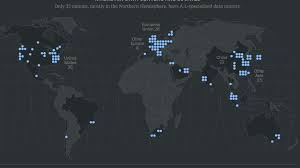
Global regulatory frameworks for AI are rapidly hardening as the August 2, 2026, full implementation deadline for the EU AI Act approaches.[29, 30, 31] European institutions, including the Commission and Parliament, have already banned their staff from using fully AI-generated video and images in official communications to prevent the accidental spread of misinformation.[10] Under the Act, "High-Risk" AI systems in sectors like biometrics and law enforcement must undergo rigorous conformity assessments and be registered in an EU database.[30, 32] A new "Digital Omnibus" proposal is currently being debated, which may grant a grace period for existing high-risk systems that were on the market before August 2026, provided they do not undergo significant design changes.[33] Why this matters: The EU is positioning itself as the world’s most stringent regulator, creating a "Brussels Effect" where global AI providers must adhere to European safety standards to maintain access to the single market.
In the United States, the policy direction remains focused on maintaining American dominance through a mix of deregulation and infrastructure support. The White House recently released its "National Policy Framework for AI," which recommends that Congress establish a unified federal standard that preempts a "patchwork" of state-level AI laws.[34] The framework emphasizes protecting free speech, limits government coercion of AI providers to alter content, and suggests that training models on copyrighted data does not inherently violate law.[34] It also introduces a "Ratepayer Protection Pledge" to ensure that the expansion of AI data centers does not lead to increased energy costs for local residents.[34] Why this matters: The US framework is a direct counter to the EU’s risk-based approach, focusing instead on "unleashing ingenuity" and treating AI infrastructure as a national security asset that must be protected from over-regulation.
Edge AI and Specialized Applications: ASUS and BD Leading the Vertical Surge
The move toward on-device, localized AI has reached the mass market with the launch of the ASUS UGen300 USB AI Accelerator.[35] This plug-and-play device features the Hailo-10H processor, delivering 40 TOPS of performance to enable generative AI tasks—like text generation and real-time vision perception—on any Windows, Linux, or Android device.[35] With 8GB of dedicated memory and a power draw of just 2.5 watts, the UGen300 allows developers and professionals to run complex AI pipelines without relying on cloud subscriptions or facing latency issues.[35] Why this matters: The UGen300 represents a major step toward "private AI," where the compute happens on the user’s desk rather than in a remote data center, solving the privacy and reliability concerns that have hindered enterprise adoption of generative tools.
In the healthcare sector, Becton, Dickinson and Company (BD) has launched the "Pyxis Pro" dispensing solution and the "Incada" connected care platform in the European market.[36] This system uses AI-driven insights and natural language search to modernize medication management, reduce waste, and improve labor efficiency in hospitals.[36] Leveraging the AWS European Sovereign Cloud, the platform allows EU healthcare systems to meet data sovereignty requirements while using advanced cloud analytics.[36] Why this matters: The integration of AI into medication dispensing is a "quiet" but vital breakthrough, moving AI from the world of chat and images into the critical infrastructure of patient safety and hospital logistics.
Human Capital and the Ethics of Automation: Research Warnings
New research from the University of Bath has issued a stark warning regarding the erosion of "human capital" as AI adoption accelerates.[37] The study identifies three forms of knowledge that are fundamentally incompatible with AI—embodied (hands-on experience), encultured (understanding organizational culture), and embrained (analytical judgment)—and warns that outsourcing these to AI will cause them to "wither over time".[37] Researchers suggest that organizations should create "learning vaults," or protected spaces for human interaction and shadowing, to prevent a "dangerous dependency" that could compromise long-term profitability.[37] Why this matters: As AI systems become more capable, the primary challenge for HR and people managers will be ensuring that the next generation of workers still develops the "know-why" and "know-how" that cannot be replicated by an LLM.
On the diagnostic front, a major study published in Nature Medicine describes an AI proteomics model capable of detecting five different dementia-related conditions from a single blood sample.[38] The model, developed by Lund University, outperformed traditional clinical diagnoses by identifying protein patterns associated with Alzheimer’s, Parkinson’s, ALS, and more.[38] The researchers found that many individuals with a clinical Alzheimer’s diagnosis actually showed protein patterns more consistent with other disorders, suggesting a need for more biological-based subtyping in dementia care.[38] Why this matters: This research marks the transition of AI from a predictive tool to a diagnostic authority, potentially allowing for earlier and more accurate interventions in neurodegenerative diseases that were previously difficult to distinguish in their early stages.

April 1st: The Culture of AI and the "Scent of Honesty"
April Fool’s Day 2026 has seen a surge in "AI-powered" satire that highlights both the ubiquity and the absurdity of current tech trends. The electronics retailer Currys unveiled "SniffGuard," an AI gadget that uses "advanced scent-sensing technology" to deliver a blunt verdict on the stench status of garments, replacing the "quick sniff and hope" method.[39] Timekettle announced a "British-to-American" translation update to resolve "transatlantic misunderstandings" over phrases like "bits and bobs" and "I’m knackered".[39] In the cybersecurity realm, FireMon AI introduced a fictional version of its software that adjusts firewall policies based on the administrator’s "emotional state," locking down the network if they feel "overwhelmed".[40] Why this matters: These jokes serve as a "reality check" for the industry, reflecting a public sentiment that is simultaneously impressed by AI’s power and weary of the "AI-in-everything" marketing blitz.
The gaming industry has also embraced the day with a mix of high-tech satire and genuine community testing. Pokemon Pokopia "announced" wacky waving inflatable Sudowoodos, while PUBG: Battlegrounds launched a limited-time Prop Hunt mode.[41] Most significantly, fans were left in a state of "Starfield PS5 confusion," unsure if a leaked release date was a masterclass in trolling or a genuine leak disguised as a prank, given Microsoft’s recent shift toward multi-platform releases.[41] Why this matters: In 2026, April 1st has become a "safe testing ground" for wild ideas and secret marketing weapons, where developers can gauge player interest in radical changes under the guise of a joke.
- OpenAI Raises $3 Billion from Retail Investors as Part of $122 Billion Funding - MLQ.ai, https://mlq.ai/news/openai-raises-3-billion-from-retail-investors-as-part-of-122-billion-funding/
- OpenAI, parent firm of ChatGPT, closes $122bn funding round amid AI boom - The Guardian, https://www.theguardian.com/technology/2026/mar/31/openai-raises-122-billion-ai-boom
- OpenAI's $122 Billion Mega-Round Dwarfs Nearly Every S&P 500 Giant, But With Zero Profit, https://beincrypto.com/openai-122b-funding-round-852b-valuation/
- OpenAI valued at $852 billion after completing $122 billion round ..., https://www.japantimes.co.jp/business/2026/04/01/tech/openai-852-billion-round/
- As OpenAI closes record-breaking $122 billion funding round; pressure shifts to Sam Altman to, https://timesofindia.indiatimes.com/technology/tech-news/as-openai-closes-record-breaking-122-billion-funding-round-pressure-shifts-to-sam-altman-to-/articleshow/129948210.cms
- OpenAI Funding: Historic $122B Raise Anchors IPO Narrative as Retail Investors Pile In, https://www.mexc.com/news/996033
- OpenAI Closes $122B Raise at $852B Value as AI Capex Surge Accelerates, https://www.theenergymag.com/news/2026-04-01/openai-value-ai/
- OpenAI raises $122B and focuses on an AI superapp - Techzine Europe, https://www.techzine.eu/news/applications/140113/openai-raises-122b-and-focuses-on-an-ai-superapp/
- Around the Horn Digest: Everything That Happened in AI Today (Monday, March 31, 2026) - The Neuron, https://www.theneuron.ai/explainer-articles/around-the-horn-digest-everything-that-happened-in-ai-today-monday-march-31-2026/
- Techmeme, https://techmeme.com/
- From Computing Power to Efficiency: OpenAI VS Claude Code - TradingKey, https://www.tradingkey.com/analysis/stocks/us-stocks/261741914-openai-ipo-claudecode-anthropic-tradingkey
- Anthropic Claude source code leak explained: Techie reveals how a ..., https://m.economictimes.com/news/new-updates/anthropic-claude-source-code-leak-explained-techie-reveals-how-a-4-am-update-exposed-512000-lines-of-code/articleshow/129946990.cms
- The Great Claude Code Leak of 2026: Accident, Incompetence, or the Best PR Stunt in AI History? - DEV Community, https://dev.to/varshithvhegde/the-great-claude-code-leak-of-2026-accident-incompetence-or-the-best-pr-stunt-in-ai-history-3igm
- $340 billion Anthropic that wiped trillions from stock market worldwide has source code of its most-important tool leaked on internet | - The Times of India, https://timesofindia.indiatimes.com/technology/tech-news/340-billion-anthropic-that-wiped-trillions-from-stock-market-worldwide-has-source-code-of-its-most-important-tool-leaked-on-internet/articleshow/129925824.cms
- Claude Code Leaked Source: BUDDY, KAIROS & Every Hidden Feature Inside, https://wavespeed.ai/blog/posts/claude-code-leaked-source-hidden-features/
- What Is Claude Mythos? Leak, Capybara Tier & What Anthropic Confirmed - WaveSpeed AI, https://wavespeed.ai/blog/posts/what-is-claude-mythos/
- NVIDIA Kicks Off the Next Generation of AI With Rubin — Six New Chips, One Incredible AI Supercomputer - NVIDIA Investor Relations, https://investor.nvidia.com/news/press-release-details/2026/NVIDIA-Kicks-Off-the-Next-Generation-of-AI-With-Rubin--Six-New-Chips-One-Incredible-AI-Supercomputer/default.aspx
- Nvidia Launches Highly Anticipated Blackwell Successor: Here's What Its New Rubin AI Chips Can Do - Stocktwits, https://stocktwits.com/news-articles/markets/equity/nvidia-launches-highly-anticipated-blackwell-successor/cmxwXSZR4RZ
- Nvidia Blackwell successor Rubin releases in 2026: significant performance boost, https://www.techzine.eu/news/infrastructure/137668/nvidia-blackwell-successor-rubin-releases-in-2026-significant-performance-boost/
- Gemini Apps' release updates & improvements - Google Gemini, https://gemini.google/release-notes/
- Release notes | Gemini API - Google AI for Developers, https://ai.google.dev/gemini-api/docs/changelog
- Google Gemini New Features 2026 — The Update That Quietly Changed Everything, https://www.reddit.com/r/AISEOInsider/comments/1qvu1nk/google_gemini_new_features_2026_the_update_that/
- Musk Texted Zuckerberg About Buying OpenAI — Now That's Evidence | Let's Data Science, https://letsdatascience.com/blog/musk-pitched-zuckerberg-openai-bid-trial-texts
- Unsealed Court Filings Reveal Zuckerberg's Text Response to Musk's OpenAI Bid Pitch - MLQ.ai, https://mlq.ai/news/unsealed-court-filings-reveal-zuckerbergs-text-response-to-musks-openai-bid-pitch/
- 'Based on what I've seen…': Judge 'doubts' Elon Musk's $134 billion damages claim against OpenAI - The Times of India, https://timesofindia.indiatimes.com/technology/tech-news/based-on-what-ive-seen-judge-doubts-elon-musks-134-billion-damages-claim-against-openai/articleshow/129572397.cms
- Oakland judge clears way for trial on whether OpenAI betrayed charitable roots, https://localnewsmatters.org/2026/03/16/musk-openai-trial-pretrial-hearing-oakland/
- Elon Musk v. OpenAI Part 2: Microsoft Faces Jury as Judge Finds "Considerable Evidence" of Knowledge : r/ChatGPTcomplaints - Reddit, https://www.reddit.com/r/ChatGPTcomplaints/comments/1rnfga1/elon_musk_v_openai_part_2_microsoft_faces_jury_as/
- Perhaps the Musk vs. Altman lawsuit regarding OpenAI 4o could help us—the chances are slim, but there IS a chance - Reddit, https://www.reddit.com/r/ChatGPTcomplaints/comments/1rz7npi/perhaps_the_musk_vs_altman_lawsuit_regarding/
- EU AI Act - Updates, Compliance, Training, https://www.artificial-intelligence-act.com/
- EU AI Act Summary: Complete Guide 2026 & PDF Available, https://euaiactguide.com/eu-ai-act-summary-2026/
- The EU AI Act implementation timeline: understanding the next deadline for compliance, https://www.kennedyslaw.com/en/thought-leadership/article/2026/the-eu-ai-act-implementation-timeline-understanding-the-next-deadline-for-compliance/
- EU and Luxembourg Update on the European Harmonised Rules on Artificial Intelligence—Recent Developments - K&L Gates, https://www.klgates.com/EU-and-Luxembourg-Update-on-the-European-Harmonised-Rules-on-Artificial-IntelligenceRecent-Developments-1-20-2026
- EU AI Act - Timeline Update | Tech Law Blog, https://www.techlaw.ie/2026/03/articles/artificial-intelligence/eu-ai-act-timeline-update/
- White House Releases National Policy Framework for Artificial ..., https://www.wilmerhale.com/en/insights/blogs/wilmerhale-privacy-and-cybersecurity-law/20260323-white-house-releases-national-policy-framework-for-artificial-intelligence
- ASUS Announces UGen300 USB AI Accelerator | ASUS Pressroom ..., https://press.asus.com/news/press-releases/asus-ugen300-usb-ai-accelerator-generative-ai-edge/
- BD Launches AI-Enabled Medication Dispensing System to the European Market, https://news.bd.com/2026-04-01-BD-Launches-AI-Enabled-Medication-Dispensing-System-to-the-European-Market
- University of Bath study warns AI could erode human capital, thinking and expertise in the workplace, https://www.bath.ac.uk/announcements/university-of-bath-study-warns-ai-could-erode-human-capital-thinking-and-expertise-in-the-workplace
- AI Model Detects Multiple Cognitive Brain Diseases From a Single Blood Sample, https://www.technologynetworks.com/tn/news/ai-model-detects-multiple-cognitive-brain-diseases-from-a-single-blood-sample-411271
- April Fools' Day 2026 LIVE — rating the best (and worst) jokes and pranks | Tom's Guide, https://www.tomsguide.com/news/live/april-fools-day-2026-live-best-jokes-pranks
- When AI Becomes the Punchline - Security Boulevard, https://securityboulevard.com/2026/04/when-ai-becomes-the-punchline/
- The Best (and Weirdest) Gaming April Fools' Day Stories of 2026 - GamesHub, https://www.gameshub.com/news/article/best-gaming-april-fools-day-stories-2026-2863454/
Recommended AI tools

Claude
Conversational AI
Your trusted AI collaborator for coding, research, productivity, and enterprise challenges

Suno AI
Music Generation
Make any song you can imagine

Notebook LLM
Productivity & Collaboration
Turn complexity into clarity with your AI-powered research and thinking partner
AutoGPT
Productivity & Collaboration
Build, deploy, and manage autonomous AI agents – automate anything, effortlessly.

Grammarly
Writing & Translation
Your AI writing partner for work

Microsoft Copilot
Conversational AI
Your everyday AI companion for work, learning, and creativity
About the Author

Albert Schaper is a co-founder of Best-AI.org. He focuses on product strategy, AI adoption, practical tool selection, and educational content that helps users compare AI products with clearer context.
More from AlbertWas this article helpful?
Found outdated info or have suggestions? Send us a note.