The Data Center Colossus: How Server Farms are Reshaping the World
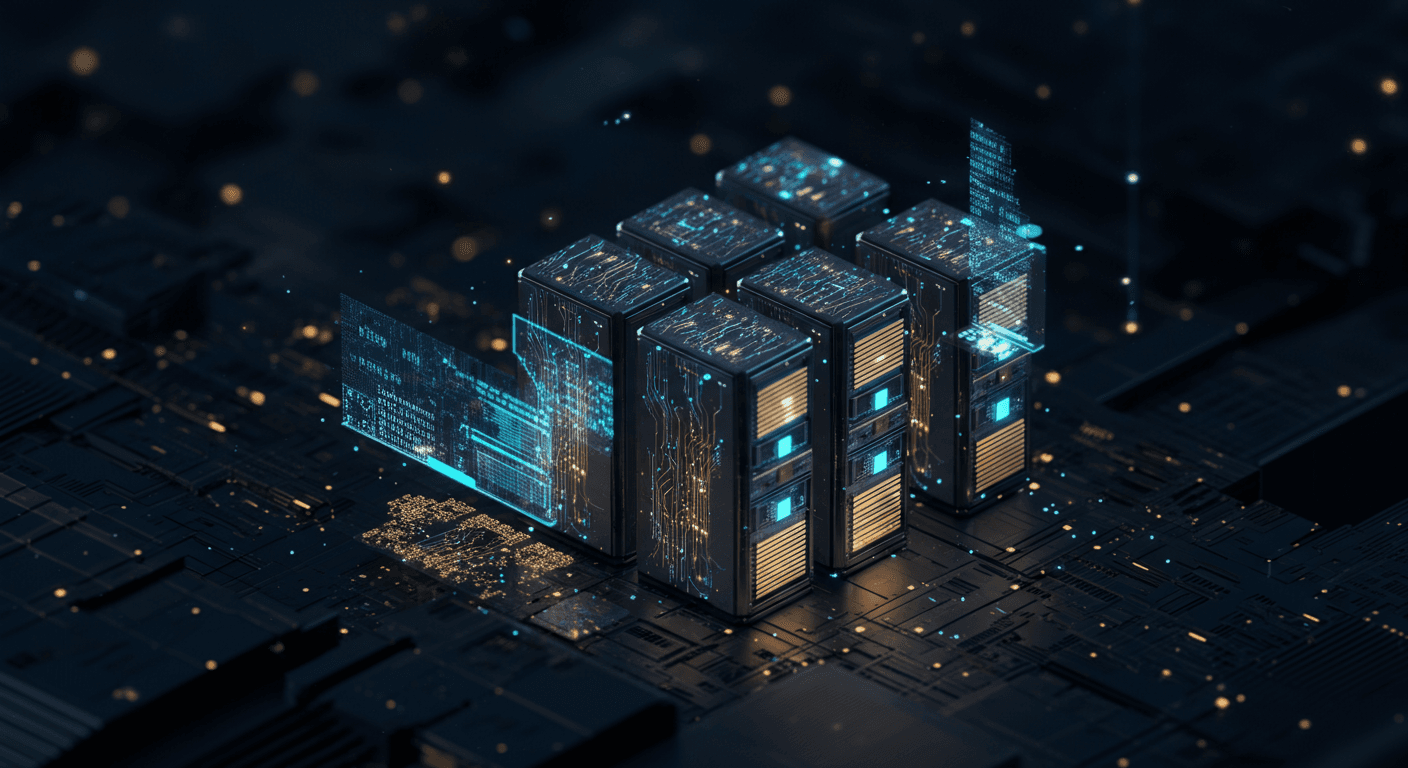
Is the future of AI being built in nondescript warehouses? The answer might surprise you.
The Data Center Defined
Data centers are the physical infrastructure behind the internet, and crucial in the age of AI. They house the servers that power the websites we browse, the apps we use, and the AI models that are rapidly changing our world. The glossary on Best AI Tools can assist with tricky definitions. Without them, the digital world as we know it grinds to a halt.The Exponential Growth
The amount of data we generate is exploding. This creates an insatiable demand for processing power.- AI models, in particular, are extremely resource-intensive.
- The more data available, the more powerful AI becomes, creating a feedback loop.
- This fuels the rapid expansion of data center infrastructure components.
Inside the Box: Data Center Infrastructure Components
What exactly goes into a data center? It's more than just rows of servers. Here are some key elements:- Servers: The workhorses of the data center, providing the raw computing power.
- Networking: High-speed connections to move data around and to the outside world.
- Cooling Systems: Preventing overheating is critical for optimal performance.
- Power Grids: Redundant and reliable power supplies are essential to avoid downtime.
The Many Flavors of Data Centers
Not all data centers are created equal. They come in various forms, depending on their purpose:Enterprise:* Owned and operated by a single company. Colocation:* Renting space in a facility shared by multiple companies. Hyperscale:* Massive facilities run by tech giants like Google or Amazon. Edge:* Smaller, localized data centers closer to users for faster speeds.
Location, Location, Location
Where are these powerhouses located? Key hubs include places like:- Northern Virginia
- Silicon Valley
- Singapore
Data centers are more than just buildings; they are the foundation upon which the AI revolution is built. To learn more about specific AI applications, explore our tools category.
Is the future etched in silicon? Perhaps, considering the immense growth of data centers worldwide.
Billion-Dollar Investments
Data centers represent colossal capital investments. Building just one modern data center can easily exceed a billion dollars. These projects require vast amounts of materials and specialized equipment. Think about the scale; it's not just computers!Job Creation Engines
Data center economic development generates numerous jobs. Construction brings immediate employment. Operation and maintenance provide long-term careers.- Construction workers
- Technicians
- Security personnel
- IT specialists
Tax Revenue Goldmines
Local communities benefit significantly from data center tax revenue. These facilities contribute substantial property taxes. Governments can use this income for schools, infrastructure, and public services.Tax revenue from data center economic development helps improve local services.
Local Economic Catalysts
Beyond direct investment, data centers stimulate local economies. They impact real estate values. Energy sectors thrive. Technology industries see a boost. Data centers also attract further investment from tech companies and innovators.The rise of AI tools like ChatGPT further underscores the importance of these data hubs, as such tools rely heavily on the processing power they provide.
Magnets for Innovation
Data centers serve as magnets. Tech companies often locate near them. This proximity fosters innovation and collaboration. Areas with robust data infrastructure become attractive tech hubs. Explore our AI News to see the latest innovations.Are data centers the unsung heroes or the looming villains of our digital age?
Power Consumption: A Growing Concern
Data centers, the backbone of the internet, consume massive amounts of energy. Their carbon footprint is significant, demanding immediate action. We need sustainable data center solutions now.- Energy demands are skyrocketing.
- Data centers contribute significantly to global carbon emissions.
- Traditional cooling systems guzzle power.
Innovations in Energy Efficiency
Fortunately, innovation is stepping up. Advanced cooling technologies, like liquid cooling, are becoming more prevalent. Renewable energy sources offer a cleaner alternative. Smart power management optimizes resource allocation.- Advanced cooling slashes energy use.
- Renewable energy powers eco-friendly facilities.
- Smart systems balance workloads and conserve energy.
Green Data Center Initiatives
Many companies are embracing "green" initiatives. These strategies include carbon neutrality programs, water conservation, and waste reduction. Explore how to find the Best AI Tool Directory for energy-efficient solutions.These initiatives are crucial for a sustainable future.
Regulations and Standards
Government regulations and industry standards are pushing data centers toward sustainability. They are adopting stricter guidelines for energy consumption and waste disposal.- Mandatory reporting increases accountability.
- Incentives promote eco-friendly practices.
AI's Role in Optimization

AI can play a key role in optimizing energy consumption. AI algorithms can dynamically adjust cooling, power, and workload distribution. This leads to significant efficiency gains. Check out our Design AI Tools to see how AI aids data center design.
- AI predicts and adjusts energy needs.
- AI automates energy conservation strategies.
Data centers are the backbone of our digital world. But, did you know their location can drastically impact the apps and services we use every day?
Latency and Proximity
Data center location is crucial for application performance. Think of latency as digital lag; the further the data travels, the longer the lag. For real-time applications like online gaming or financial trading, proximity to the user is key. Placing a server closer reduces latency, ensuring a smoother, more responsive experience.Connectivity and Bandwidth
> Location matters for connectivity.
Data centers need robust internet connections. They rely on fiber optic networks and internet exchange points (IXPs). IXPs allow networks to connect directly, reducing the distance data travels. High bandwidth ensures rapid data transfer, critical for services like video streaming and cloud storage.Regulatory Environment
Regulations play a huge role in where data centers are built. Data privacy laws like GDPR, security requirements, and compliance standards vary by region. Companies must carefully consider these regulations when choosing a location. These rules directly affect how they store and process user data.Disaster Resilience
Mitigating risks is vital. Data centers face threats from natural disasters, power outages, and cyberattacks. Locations are often chosen to minimize these risks. Redundant power systems, backup generators, and robust security measures are essential for disaster resilience.The Edge Computing Shift
Edge computing is changing data center location strategies. Instead of centralized mega-centers, edge computing distributes processing closer to the source of data. This means smaller, localized data centers are popping up to support IoT devices, autonomous vehicles, and other edge applications.The location of data centers is a strategic decision. Savvy companies focus on data center location optimization to improve performance, comply with regulations, and ensure business continuity. Explore our Learn section to deepen your AI knowledge!
Security Fortresses: Protecting Data in a Hyper-Connected World
Can server farms truly safeguard our increasingly valuable data? Data centers are the backbone of our digital world. They power everything from streaming services to AI applications, and securing them is paramount. Data center security compliance isn't just a checklist; it's an evolving necessity.
Physical Safeguards
Physical security creates the first line of defense.- Access Control: Strict measures are needed to prevent unauthorized entry. Biometric scans and multi-factor authentication are common.
- Surveillance Systems: 24/7 monitoring through CCTV and alarms ensures no activity goes unnoticed.
- Perimeter Protection: Fences, barriers, and security personnel guard against external threats.
Cybersecurity Protocols
Physical measures alone aren't enough. Cybersecurity protocols act as digital shields.- Firewalls: These act as gatekeepers, controlling network traffic and blocking malicious access attempts.
- Intrusion Detection Systems: Continuously monitoring for suspicious activity, alerting security teams to potential breaches.
- Data Encryption: Rendering data unreadable to unauthorized parties, protecting it both in transit and at rest.
Navigating Data Privacy Regulations
Compliance with data privacy regulations adds another layer of complexity.- GDPR (General Data Protection Regulation): Protects the personal data of EU citizens.
- CCPA (California Consumer Privacy Act): Grants California residents specific rights regarding their personal information.
- Other Compliance Requirements: Industry-specific regulations like HIPAA for healthcare data add further constraints.
The Ever-Evolving Threat Landscape
The threats are continuous and adapting.- Cyberattacks: Ranging from malware to sophisticated ransomware, requiring constant vigilance.
- Data Breaches: The accidental or intentional release of secure information.
- Insider Threats: Malicious or negligent actions by employees or contractors.
AI's Rising Role
AI is becoming a valuable ally.- AI-Powered Threat Detection: Machine learning algorithms can identify anomalies and predict potential attacks.
- Enhanced Security: AI can automate security tasks, improving response times and reducing human error.
Is the traditional server room destined to become a relic of the past?
The Rise of Liquid Cooling
Emerging technologies are revolutionizing how we cool these power-hungry data centers. Liquid cooling and immersion cooling are becoming increasingly viable. These methods offer superior heat dissipation compared to traditional air cooling. Consider liquid cooling – it's like giving your servers a refreshing swim to prevent overheating.AI-Powered Automation
AI isn't just consuming data center resources; it's optimizing them.AI-powered automation streamlines resource allocation. Predictive maintenance and anomaly detection minimize downtime.
- Resource optimization leads to better energy efficiency.
- Predictive maintenance saves costs on repairs.
- Anomaly detection enhances security.
Modular and Prefabricated
We're seeing a shift toward modular and prefabricated data centers. These offer faster deployment and greater flexibility. Imagine building blocks for server farms, ready to assemble as needed. This approach offers quicker scalability and reduced construction time.The Cloud and Metaverse Convergence
The line between data centers and cloud computing is blurring. Hybrid cloud strategies and multi-cloud environments are becoming the norm. The metaverse is driving increased demand for data center infrastructure. This demand pushes innovation even further. Explore our AI Tool Directory to discover tools driving this transformation.In summary, the future trends in data centers point toward efficiency, automation, and adaptability.
Will the future of the internet be built on server farms?
Market Trends in Data Centers
The data center market analysis reveals a landscape of substantial growth. Forecasts predict continued expansion, fueled by increasing demand for cloud computing and AI. This growth attracts significant investment. Opportunities exist across various areas, but the competition is fierce.- Growth forecasts remain strong for the foreseeable future.
- Investment opportunities abound in emerging technologies.
- The competitive landscape is dominated by established players but with room for innovation.
Financing and Regulatory Hurdles
Financing data center projects comes from diverse sources. Private equity firms, venture capital, and infrastructure funds are all key players. However, navigating regulatory hurdles can be challenging. Zoning laws, environmental regulations, and permitting processes add complexity.Data centers face increased scrutiny regarding energy consumption and environmental impact.
Talent and Long-Term Outlook

Attracting and retaining skilled data center professionals is crucial. The industry needs experts in areas such as network engineering and cybersecurity. The long-term outlook remains positive, with sustained growth anticipated. Evolving business models will likely include edge computing solutions.
- Talent acquisition is vital for sustained growth.
- Sustained growth relies on evolving business models and innovation.
- The long-term outlook for data centers is positive, but adaptability is essential.
Keywords
data centers, data center infrastructure, hyperscale data centers, edge computing, data center sustainability, data center security, data center market, cloud computing, AI data centers, green data centers, data center colocation, data center energy consumption, data center trends, data center investment
Hashtags
#DataCenters #AIInfrastructure #CloudComputing #SustainableTech #DigitalTransformation
Recommended AI tools

ChatGPT
Conversational AI
AI research, productivity, and conversation—smarter thinking, deeper insights.

Perplexity
Search & Discovery
Clear answers from reliable sources, powered by AI.

Claude
Conversational AI
Your trusted AI collaborator for coding, research, productivity, and enterprise challenges

OpenClaw AI Agent
Productivity & Collaboration
The AI that actually does things.

Cursor
Code Assistance
Your coding agent for building ambitious software

DeepSeek
Conversational AI
Efficient open-weight AI models for advanced reasoning and research
About the Author

Written by
Dr. William Bobos
Dr. William Bobos (known as 'Dr. Bob') is a contributor focused on practical AI tool analysis, research context, and clear summaries for builders and decision-makers.
More from Dr.Was this article helpful?
Found outdated info or have suggestions? Send us a note.