
- 1 reviews
- 4.0
- Monthly users
- 407K
- Pricing
- Free
- Platform
- Web App
- Best for
- Software Developers / Content Creators
Overview
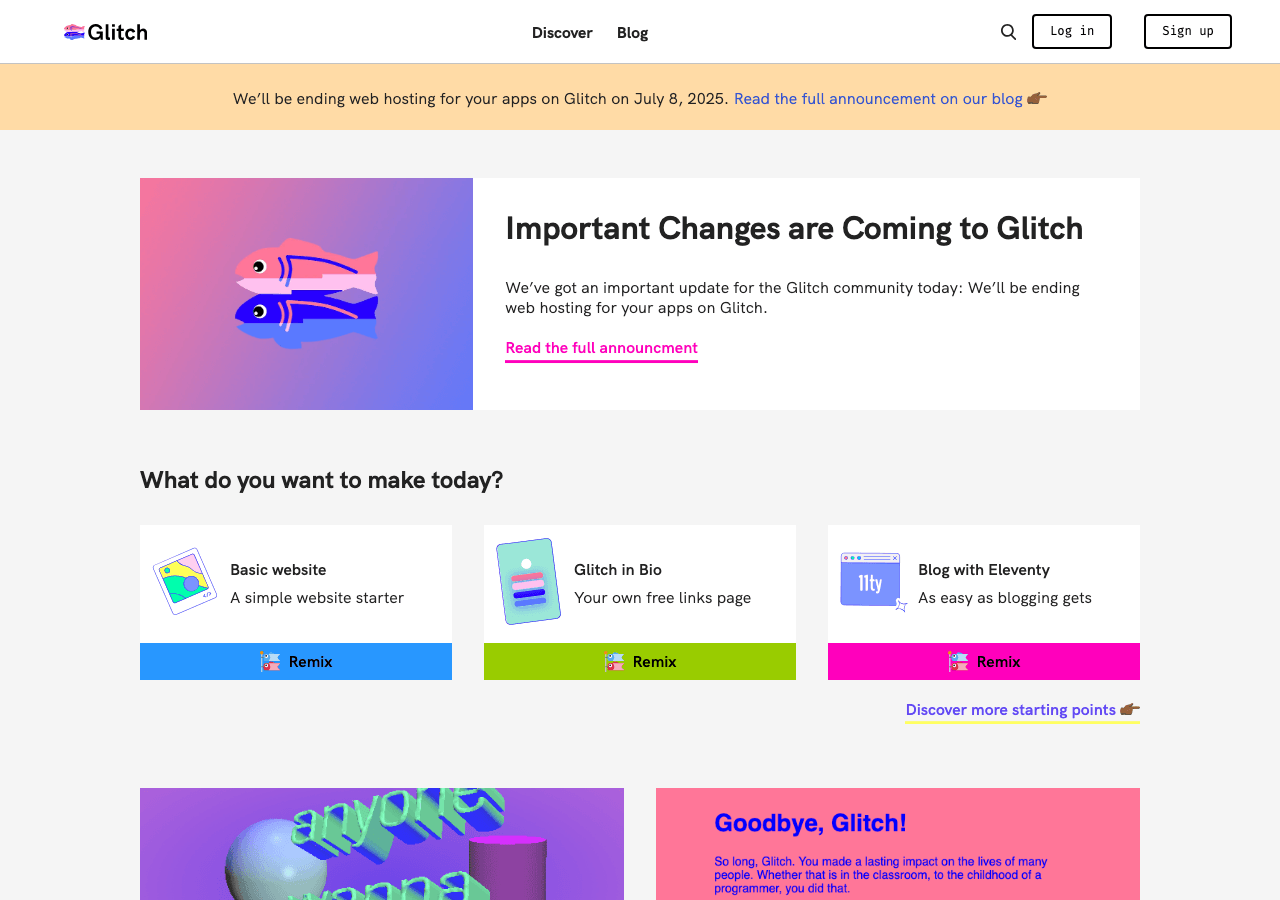
Glitch was a collaborative platform for creating, sharing, and remixing web applications in real-time, but as of July 8, 2025, core project hosting and user profiles are being shut down. Users can still access their dashboards through the end of 2025 to export projects and set up subdomain redirects, but the platform will no longer provide hosting or coll...
Build the web together
Facts & Trust
Pricing and key facts stay visible first; expand compliance, specs, and provider details when you need deeper due diligence.
Figures above in this panel are rounded for quick orientation. Sign in for exact visits, rank breakdown, and engagement metrics.
Key Features
Real-time coding assistance
Integrates directly into your editor for instant code suggestions and refactoring. JavaScript/TypeScript
Programmatic access
Official API docs and clear auth flows—ideal for custom automations.
Multi-language SDK support
1 SDKs (e.g., JavaScript/TypeScript) help dev teams launch prototypes quickly.
Expert Insight
Dr. William Bobos
Dr. William Bobos has reviewed Glitch for Code Assistance. With expertise in AI tools, Dr. William Bobos identifies this tool as especially effective for software developers requiring AI tools functionality.
Rate this Tool
About Glitch
“Build the web together”
Glitch Snapshot
Key facts we track so you can judge fit before visiting the provider.
- Primary category
- Code Assistance
- Best fit
- Software Developers, Content Creators, Educators +1 more
- Platforms
- Web App
- Pricing signal
- Free
- Provider context
- Glitch - US
- Known integrations
- API
- Developer access
- API documentation, JavaScript/TypeScript
- Data handling
- Global hosting, Privacy policy linked
Before you choose Glitch
- Confirm Glitch's current limits, renewal terms, and seat pricing on the official site.
- Review privacy, retention, and data-processing terms before using sensitive data.
- Test the integrations or API path against one real workflow before rollout.
- Make sure the supported platform matches where your team actually works.
Listing data is compiled from structured provider information, public signals, submissions, and periodic checks where available. Treat this page as a shortlist aid, then verify pricing, compliance, and product limits with the provider before making a business-critical decision.
How Glitch Works
Understanding the core functionality and approach of Glitch.
Glitch integrates directly into your development workflow via API and IDE extensions. Code suggestions, refactoring, and debugging happen where you already work. Integrations with API keep Glitch connected to your workflow.
Key Features
Explore what makes Glitch stand out.
Real-time coding assistance
Integrates directly into your editor for instant code suggestions and refactoring. JavaScript/TypeScript
Programmatic access
Official API docs and clear auth flows—ideal for custom automations.
Multi-language SDK support
1 SDKs (e.g., JavaScript/TypeScript) help dev teams launch prototypes quickly.
Use Cases
Discover how different audiences leverage Glitch.
Accelerate code reviews
Glitch suggests improvements during code reviews, reducing back-and-forth between team members.
Launch faster as a startup
The free tier means startups can validate ideas before committing budget to tools.
Scale content production
Collaboration features keep stakeholders aligned throughout the creative process.
FAQ about Glitch
What is Glitch and what does it do?
How much does Glitch cost?
Is Glitch secure and compliant with data privacy regulations?
What platforms does Glitch support?
How can I try Glitch before purchasing?
What file formats does Glitch support?
Who develops and maintains Glitch?
How do I get access to Glitch?
How is usage measured and billed in Glitch?
What deployment options does Glitch offer?
Related AI News & Insights
Stay updated with the latest news and insights about Glitch and the AI industry.
Slack Code Launches: Collaborative AI Coding Channels for Enterprise Development
Z.ai Releases GLM 5.3: An Open-Weight AI Model for Enhanced Cybersecurity and Coding
SpaceX's AI Ambitions: Cognition Acquisition Denied Amidst Market Consolidation
Compare Similar Tools
See how Glitch stacks up against similar alternatives in the market.


Google AI Studio
The fastest way to build AI-first applications with Google Gemini.

Keep Glitch's listing accurate
Providers can update product facts, pricing context, screenshots, and launch notes. Paid placements are labeled separately and do not replace editorial or data-quality review.
How to Evaluate Glitch
Use this page to evaluate Glitch alongside similar code assistance tools in our alternatives overview. The goal is not to pick the most popular product; it is to find the tool that fits your actual workflow, risk level, and budget.
- Step 1Test Glitch with one real workflow before moving important work into it.
- Step 2Model the full monthly cost at your expected usage, including seats, limits, and overages.
- Step 3Verify the integration path with your existing stack before you commit.
- Step 4Review privacy, retention, and compliance terms before using sensitive data.
For developer teams, inspect the JavaScript/TypeScript SDK. Review the API documentation for auth, rate limits, errors, and export behavior. For broader context, browse more code assistance tools for software developers, or compare this page against the category hub. New to AI tool evaluation? Start with AI Tool Navigator.
Share Glitch
Help others discover Glitch by sharing it on your favorite platforms.
Report an Issue
Found incorrect information or have concerns about Glitch? Let us know.
Need a tool shortlist for a real business use case?
Get a structured 3-5 tool recommendation, pricing comparison, and implementation roadmap for your team.
Need Help Finding the Right Tool?
Looking for alternatives to Glitch or similar tools? Use our AI chatbot to find the right solution for your needs.