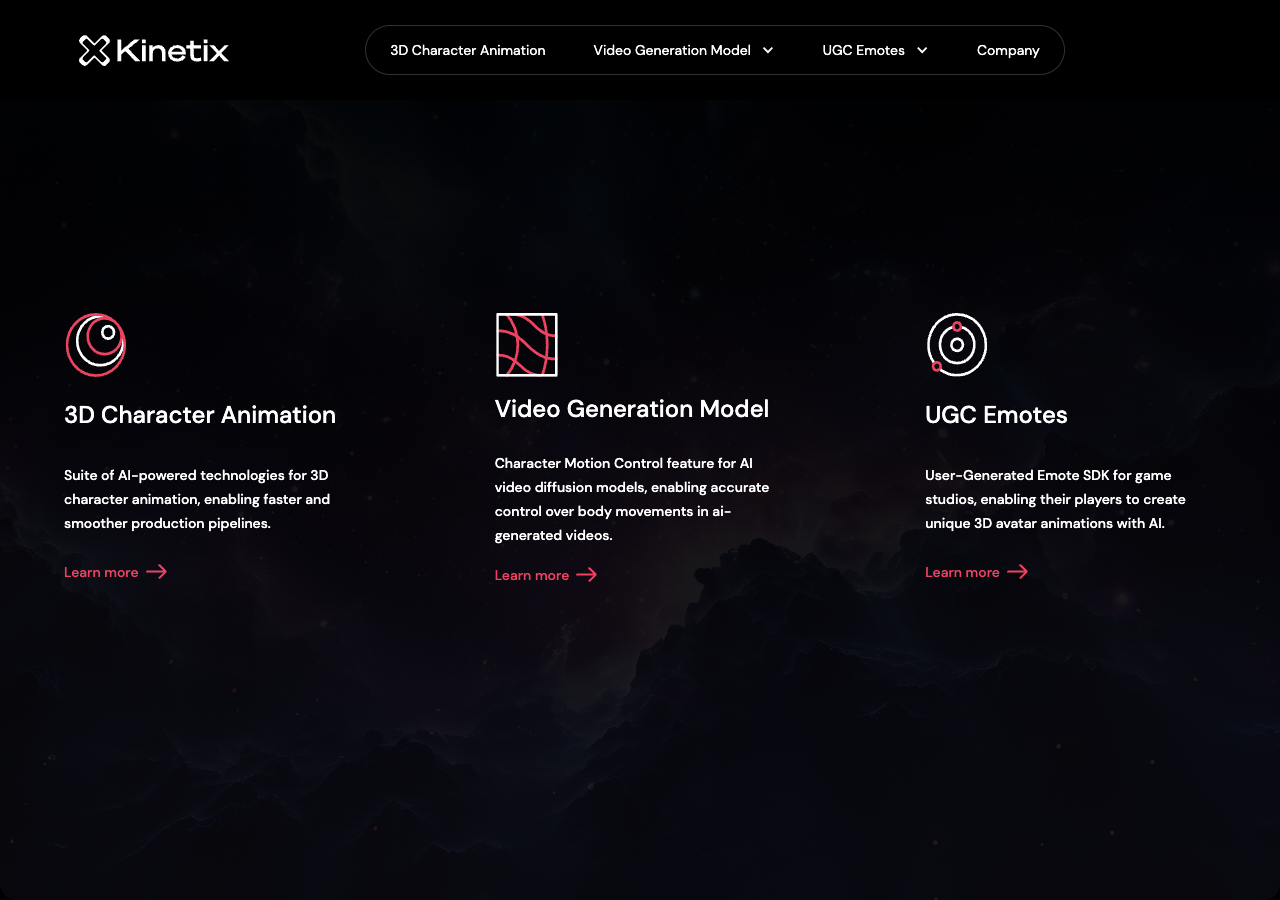
What is Kinetix and what does it do?
Kinetix is 3D controlled video AI for true cinematic creative freedom. Kinetix is an AI research company focused on understanding and generating human motion, offering a 3D-controlled video model that combines video diffusion with 3D scene understanding to give creators precise control over camera and character motion for cinematic content creation. Available on Web App, API, Kinetix is designed to enhance productivity and deliver professional-grade 3d generation capabilities.
How much does Kinetix cost?
Kinetix offers Freemium, Pay-per-Use, Enterprise, Contact for Pricing pricing options. Free integration with 10,000 free emote creations, then pay-per-use at about $0.17 per emote; enterprise plans with 50,000 free emotes and custom pricing after the free tier You can start with a free tier to test the platform before committing to a paid plan. For the most current pricing details and plan comparisons, visit the official Kinetix pricing page or contact their sales team for custom enterprise quotes.
Is Kinetix secure and compliant with data privacy regulations?
Kinetix takes data privacy seriously and implements industry-standard security measures. Data is hosted in Global, providing transparency about where your information resides. For comprehensive details about data handling, encryption, and privacy practices, review their official privacy policy. Security and compliance are continuously updated to meet evolving industry standards.
What platforms does Kinetix support?
Kinetix is available on Web App, API. The web application provides full functionality directly in your browser without requiring downloads. API access allows developers to integrate Kinetix capabilities directly into their own applications and workflows. This multi-platform approach ensures you can use Kinetix wherever and however you work best.
How can I try Kinetix before purchasing?
The freemium model gives you access to essential features at no cost, with premium capabilities available through paid upgrades. Testing the platform before committing ensures it meets your specific requirements and integrates smoothly with your existing workflows. Support for English, Spanish, French, German, Chinese, Japanese makes it accessible to global users.
What file formats does Kinetix support?
Kinetix accepts Kinetix supports a wide range of input formats, including plain text, PDF documents, emails, and web content. Users can also upload data via API calls for quick analysis. as input formats, making it compatible with your existing files and workflows. Output is delivered in The tool provides output in various formats such as structured data, sentiment analysis reports, entity recognition results, and summarized insights for easy interpretation., ensuring compatibility with downstream tools and platforms. This format flexibility allows seamless integration into diverse tech stacks and creative pipelines. Whether you're importing data, exporting results, or chaining multiple tools together, Kinetix handles format conversions efficiently without manual intervention.
Who develops and maintains Kinetix?
Kinetix is developed and maintained by Kinetix, based in FR. Most recently updated in January 2026, the platform remains actively maintained with regular feature releases and bug fixes. This ongoing commitment ensures Kinetix stays competitive and aligned with industry best practices.
How do I get access to Kinetix?
Kinetix is freely available to everyone without registration requirements. You can start using the platform immediately without going through lengthy approval processes.
How is usage measured and billed in Kinetix?
Kinetix uses API Calls, Pay-as-You-Go as billing metrics. API-based billing tracks the number of requests made to the service, providing predictable costs for developers. This usage model ensures you only pay for what you actually use, avoiding unnecessary overhead costs for features you don't need.
What deployment options does Kinetix offer?
Kinetix supports Cloud deployment configurations. Cloud-hosted options provide instant scalability without infrastructure management overhead. Choose the deployment model that best aligns with your technical requirements, security constraints, and operational preferences.
Who is Kinetix best suited for?
Kinetix is primarily designed for Content Creators, Graphic Designers, Marketing Professionals and Software Developers. Professionals in 3d generation find it invaluable for streamlining their daily tasks. Whether you need automation, creative assistance, data analysis, or communication support, Kinetix provides valuable capabilities for multiple use cases and skill levels.
Does Kinetix offer APIs or SDKs?
Yes, Kinetix provides SDK support for Python, JavaScript/TypeScript. This enables developers to integrate the tool's capabilities into custom applications.
Does Kinetix receive regular updates?
Kinetix is actively maintained with regular updates to improve features, security, and performance. Kinetix continuously develops the platform based on user feedback and industry advancements. Updates typically include new AI capabilities, interface improvements, bug fixes, and security patches. Staying up-to-date ensures you benefit from the latest AI advancements and best practices in 3d generation.
What do users say about Kinetix?
Kinetix has received 1 user review with an average rating of 4.0 out of 5 stars. This solid rating indicates the tool meets or exceeds most users' expectations across various use cases. Reading detailed reviews helps you understand real-world performance, common use cases, and potential limitations before committing to the platform.
Is the information about Kinetix up-to-date and verified?
Yes, Kinetix's listing was last verified recently by our editorial team. This recent verification ensures all information reflects the current state of the platform. Our verification process checks pricing accuracy, feature availability, platform support, and official links. If you notice outdated information, you can submit corrections through our community contribution system to help keep the directory current and reliable for all users.
How does Kinetix compare to other 3D Generation tools?
Kinetix distinguishes itself in the 3D Generation category through accessible pricing options that lower the barrier to entry. When evaluating options, consider your specific requirements around pricing, features, integrations, and compliance to determine the best fit for your use case.
How difficult is it to learn Kinetix?
The learning curve for Kinetix varies depending on your experience level and use case complexity. Most users report becoming productive within a few days depending on their background. Kinetix balances powerful capabilities with intuitive interfaces to minimize the time from signup to value delivery.
How often is Kinetix updated with new features?
Kinetix was most recently updated in January 2026, demonstrating active ongoing development. Kinetix maintains a development roadmap informed by user feedback and market trends. Regular updates typically include performance optimizations, bug fixes, security patches, and new capabilities that expand the tool's functionality. This frequent update cadence ensures the platform stays current with rapidly evolving AI technologies.
What support resources are available for Kinetix?
Kinetix provides multiple support channels to help users succeed. Privacy policy documentation explains data handling practices and compliance measures. Kinetix typically offers additional support through email, chat, or ticketing systems depending on your plan. The combination of self-service resources and direct support channels ensures you can resolve issues quickly and maximize your investment in the platform.
Is Kinetix a reliable long-term choice?
When evaluating Kinetix for long-term use, consider several indicators: Development by Kinetix provides organizational backing and accountability. High user satisfaction ratings suggest the platform delivers on its promises. Recent updates demonstrate active maintenance and feature development. Consider your specific requirements, budget constraints, and risk tolerance when making long-term platform commitments.