Open Data Science logo - Data Analytics brand identity

Open Data Science (2026)

Expert Reviewed
by Albert SchaperLast reviewed: Sep 21, 2026

Open Data Science community

Favorites
4
Pricing
Free
Platform
Web App

Overview

Open Data Science (ODS) is a platform that provides resources, tools, and a community for data scientists, researchers, and enthusiasts to collaborate, learn, and share knowledge in the field of data science.
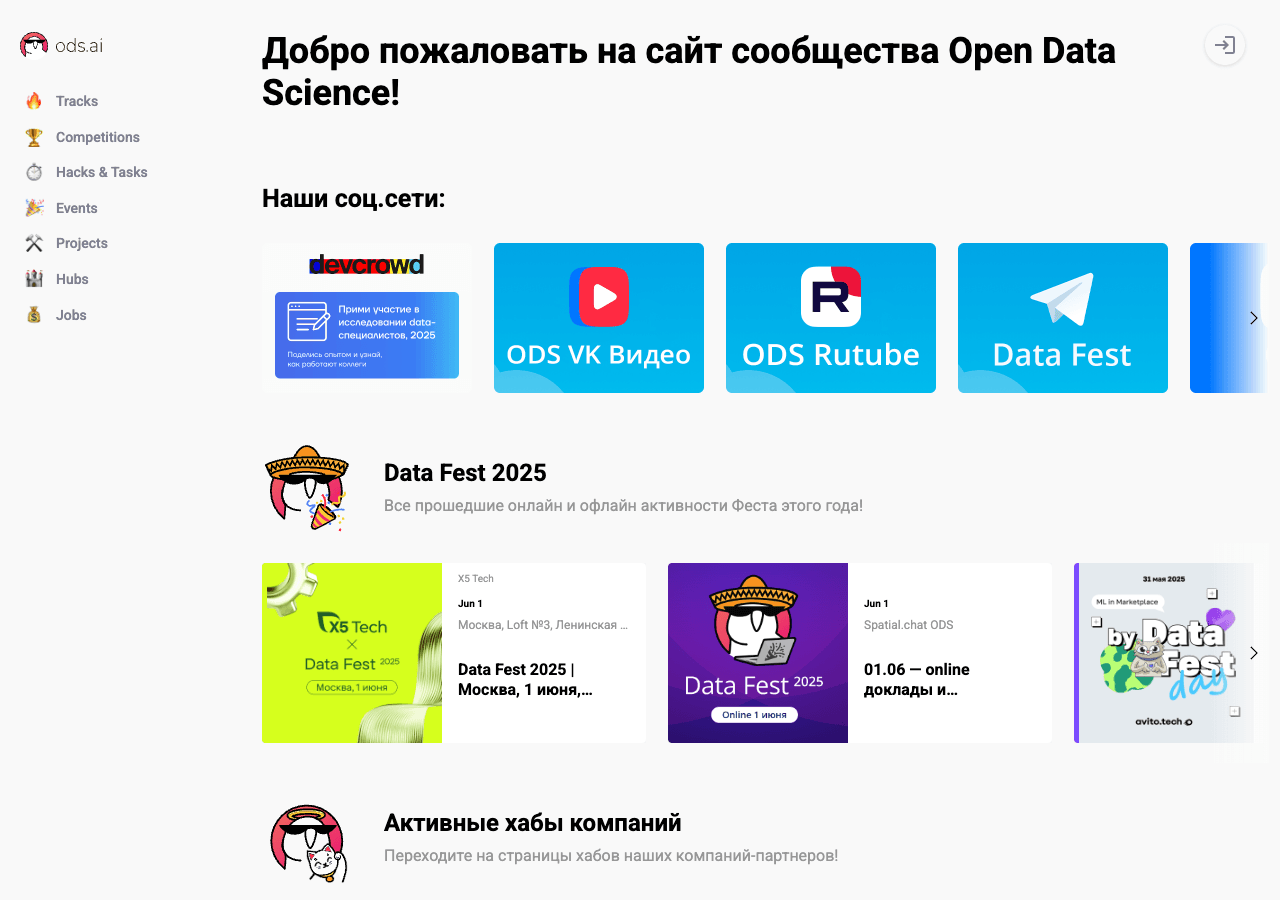
Open Data Science Data Analytics showing Data Analytics - Open Data Science community

Key Features

Dashboard & reporting

Share visualizations with stakeholders via links, embeds, or scheduled email reports.

Data-driven decision support

Dashboards and analytics surface the metrics teams need to act.

Rate this Tool

Be the first to rate this tool!

About Open Data Science

“Open Data Science community”

Open Data Science is a data analytics tool developed by Open Data Science designed for ai enthusiasts, software developers and scientists. Open Data Science (ODS) is a platform for data scientists, researchers, and enthusiasts. It provides resources, tools, and a community to facilitate collaboration, learning, and knowledge sharing in the field of data science. With over 59K monthly visits, Open Data Science has established a significant user base. The tool operates on a free pricing model. It is available on Web App. Open Data Science integrates with Plugin/Integration. It competes in the same space as Kaggle, Colab and DataCamp. Open Data Science offers Global hosting. Explore more data analytics tools or browse all categories.

Open Data Science Snapshot

Key facts we track so you can judge fit before visiting the provider.

Primary category
Data Analytics
Best fit
AI Enthusiasts, Software Developers, Scientists +2 more
Platforms
Web App
Pricing signal
Free
Provider context
Open Data Science
Known integrations
Plugin/Integration
Data handling
Global hosting
Evidence signals
59K monthly visits, 4 community favorites

Before you choose Open Data Science

  • Confirm Open Data Science's current limits, renewal terms, and seat pricing on the official site.
  • Verify privacy, retention, and data-processing terms before using sensitive data.
  • Test the integrations or API path against one real workflow before rollout.
  • Make sure the supported platform matches where your team actually works.

What to verify

  • Privacy policy, retention terms, and data-processing details should be checked with the provider.

Listing data is compiled from structured provider information, public signals, submissions, and periodic checks where available. Treat this page as a shortlist aid, then verify pricing, compliance, and product limits with the provider before making a business-critical decision.

How Open Data Science Works

Understanding the core functionality and approach of Open Data Science.

Insights power every workflow inside Open Data Science. Decision-makers get real-time context instead of waiting for manual reports. Dashboards in Open Data Science are useful when they expose metrics your team already reviews.

Key Features

Explore what makes Open Data Science stand out.

Dashboard & reporting

Share visualizations with stakeholders via links, embeds, or scheduled email reports.

Data-driven decision support

Dashboards and analytics surface the metrics teams need to act.

Use Cases

Discover how different audiences leverage Open Data Science.

Software Developers

Launch faster as a startup

Entrepreneurs use Open Data Science to automate tasks that would otherwise require hiring, from content to analysis. Integrations with Plugin/Integration keep Open Data Science connected to your workflow.

AI Enthusiasts

Analytics acceleration

Analysts use Open Data Science to assemble data, explore patterns, and publish findings faster.

FAQ about Open Data Science

What is Open Data Science and what does it do?

Open Data Science is Open Data Science community. Open Data Science (ODS) is a platform that provides resources, tools, and a community for data scientists, researchers, and enthusiasts to collaborate, learn, and share knowledge in the field of data science. Available on Web App, Open Data Science is designed to enhance productivity and deliver professional-grade data analytics capabilities.

How much does Open Data Science cost?

Open Data Science offers Free pricing options. ods.ai is a community site (tracks, competitions, events, jobs). No public price list. You can start with a free tier to test the platform before committing to a paid plan. For the most current pricing details and plan comparisons, visit the official Open Data Science pricing page or contact their sales team for custom enterprise quotes. See also Free vs Paid AI Tools for guidance on choosing the right plan.

What platforms does Open Data Science support?

Open Data Science is available on Web App. The web application provides full functionality directly in your browser without requiring downloads. This multi-platform approach ensures you can use Open Data Science wherever and however you work best.
How can I try Open Data Science before purchasing?
A free plan is available with core functionality, perfect for individual users or small projects. Testing the platform before committing ensures it meets your specific requirements and integrates smoothly with your existing workflows. Support for English makes it accessible to global users.
What file formats does Open Data Science support?
Open Data Science accepts Supports various data formats including CSV, JSON, and Excel. as input formats, making it compatible with your existing files and workflows. Output is delivered in Generates insights, reports, and visualizations in formats like HTML, PDF, and images., ensuring compatibility with downstream tools and platforms. This format flexibility allows seamless integration into diverse tech stacks and creative pipelines.
Who develops and maintains Open Data Science?
Open Data Science is developed and maintained by Open Data Science. Most recently updated in September 2026, the platform remains actively maintained with regular feature releases and bug fixes. This ongoing commitment ensures Open Data Science stays competitive and aligned with industry best practices.
How do I get access to Open Data Science?
Open Data Science is freely available to everyone without registration requirements. You can start using the platform immediately without going through lengthy approval processes.
How is usage measured and billed in Open Data Science?
Open Data Science uses Projects as billing metrics. This usage model ensures you only pay for what you actually use, avoiding unnecessary overhead costs for features you don't need.
What deployment options does Open Data Science offer?
Open Data Science supports Cloud deployment configurations. Cloud-hosted options provide instant scalability without infrastructure management overhead. Choose the deployment model that best aligns with your technical requirements, security constraints, and operational preferences.
Who is Open Data Science best suited for?
Open Data Science is primarily designed for AI Enthusiasts, Software Developers, Scientists and Educators. Professionals in data analytics find it invaluable for streamlining their daily tasks. Whether you need automation, creative assistance, data analysis, or communication support, Open Data Science provides valuable capabilities for multiple use cases and skill levels. Check out our developer guide for more recommendations.

Stay updated with the latest news and insights about Open Data Science and the AI industry.

Nvidia's Flora Open-Source Engine Slashes Robot Video Annotation Costs by 125x Compared to GPT-6 Astra – nvidia
Product Launches

Nvidia's Flora Open-Source Engine Slashes Robot Video Annotation Costs by 125x Compared to GPT-6 Astra

3 min read
Nvidia's GEAR research lab open-sourced Flora, a robot video annotation engine that labels training data up to 125x cheaper than frontier models. Flora annotates video for an estimated $0.72 per hour, compared to roughly $88.50 with GPT-6 Astra.
Read Article
Google DeepMind Unveils Genie 4: Real-Time World Model with Native Audio and Gemini 3.8 Flash Integration – google deepmind
Industry News

Google DeepMind Unveils Genie 4: Real-Time World Model with Native Audio and Gemini 3.8 Flash Integration

3 min read
Google DeepMind's Genie 4, announced October 27, 2026, is a real-time world model with native audio generation and Gemini 3.8 Flash integration. It enables real-time simulation steering and interactive experiences up to two minutes, improving on Genie 3.
Read Article
OpenAI's AI Claims to Disprove Exponential Time Hypothesis and Solve Major Math/Physics Conjectures, Hands Verification to External Experts – openai
AI Research

OpenAI's AI Claims to Disprove Exponential Time Hypothesis and Solve Major Math/Physics Conjectures, Hands Verification to External Experts

4 min read
OpenAI's AI models claim to disprove the Exponential Time Hypothesis and solve major math and physics conjectures. External experts are now verifying these three new research results.
Read Article

Compare Similar Tools

See how Open Data Science stacks up against similar alternatives in the market.

Prolific icon

Prolific

Quality data. From real people. For faster breakthroughs.

83
Pay-per-Use
+1 more
Hugging Face icon

Hugging Face

Democratizing good machine learning, one commit at a time.

242
Freemium
+3 more
Outlier icon

Outlier

Train the Next Generation of AI as a Freelancer

108
Freemium
+3 more
For tool providers

Keep Open Data Science's listing accurate

Providers can update product facts, pricing context, screenshots, and launch notes. Paid placements are labeled separately and do not replace editorial or data-quality review.

How to Evaluate Open Data Science

Compare Open Data Science with Kaggle, Colab, DataCamp and other alternatives before you decide. The goal is not to pick the most popular product; it is to find the tool that fits your actual workflow, risk level, and budget.

  1. Step 1Test Open Data Science with one real workflow before moving important work into it.
  2. Step 2Model the full monthly cost at your expected usage, including seats, limits, and overages.
  3. Step 3Verify the integration path with your existing stack before you commit.
  4. Step 4Review privacy, retention, and compliance terms before using sensitive data.

For broader context, browse more data analytics tools for ai enthusiasts, or compare this page against the category hub. New to AI tool evaluation? Start with AI Tool Navigator.

Share Open Data Science

Help others discover Open Data Science by sharing it on your favorite platforms.

Report an Issue

Found incorrect information or have concerns about Open Data Science? Let us know.

AI Tool Consulting

Need a tool shortlist for a real business use case?

Get a structured 3-5 tool recommendation, pricing comparison, and implementation roadmap for your team.

Fixed-scope 500 EUR optionBased on Best-AI.org tool dataManual expert review
Get matched