AI Tools for AI Enthusiasts
Explore 1090 curated AI tools for AI Enthusiasts, organized around real workflows, selection criteria, and practical adoption risks.
AI Enthusiasts thrive on experimentation. The right stack lets you validate cutting-edge models, remix open datasets, and showcase prototypes without spinning up heavyweight infrastructure. This collection curates playgrounds, labs, and research sandboxes so you can spend more time building and less time wiring boilerplate.
Model releases move at breakneck pace—missing a single update can make your projects feel dated. AI playgrounds now bundle rapid fine-tuning, multimodal pipelines, and shareable demos. That means you can validate concepts in hours, rally community feedback, and iterate before the next research paper drops.


Community leaders
Google Gemini · ChatGPT · Perplexity
Start with your workflow
Pick a task to open an AI-assisted recommendation prompt, then compare tools once you have a shortlist.
Spin up a prototype by combining text, image, and a...
Spin up a prototype by combining text, image, and audio generation tools into a single demo.
Ask AI FinderBenchmark frontier models against open datasets and...
Benchmark frontier models against open datasets and visualize trade-offs in latency, cost, and accuracy.
Ask AI Finderexperiment logging so you can publish reproducible ...
Automate experiment logging so you can publish reproducible project write-ups or streams.
Ask AI Findervector databases and RAG tooling to ground experime...
Use vector databases and RAG tooling to ground experiments with your personal knowledge base.
Ask AI FinderShowing 12 of 1,090 AI tools for AI Enthusiasts
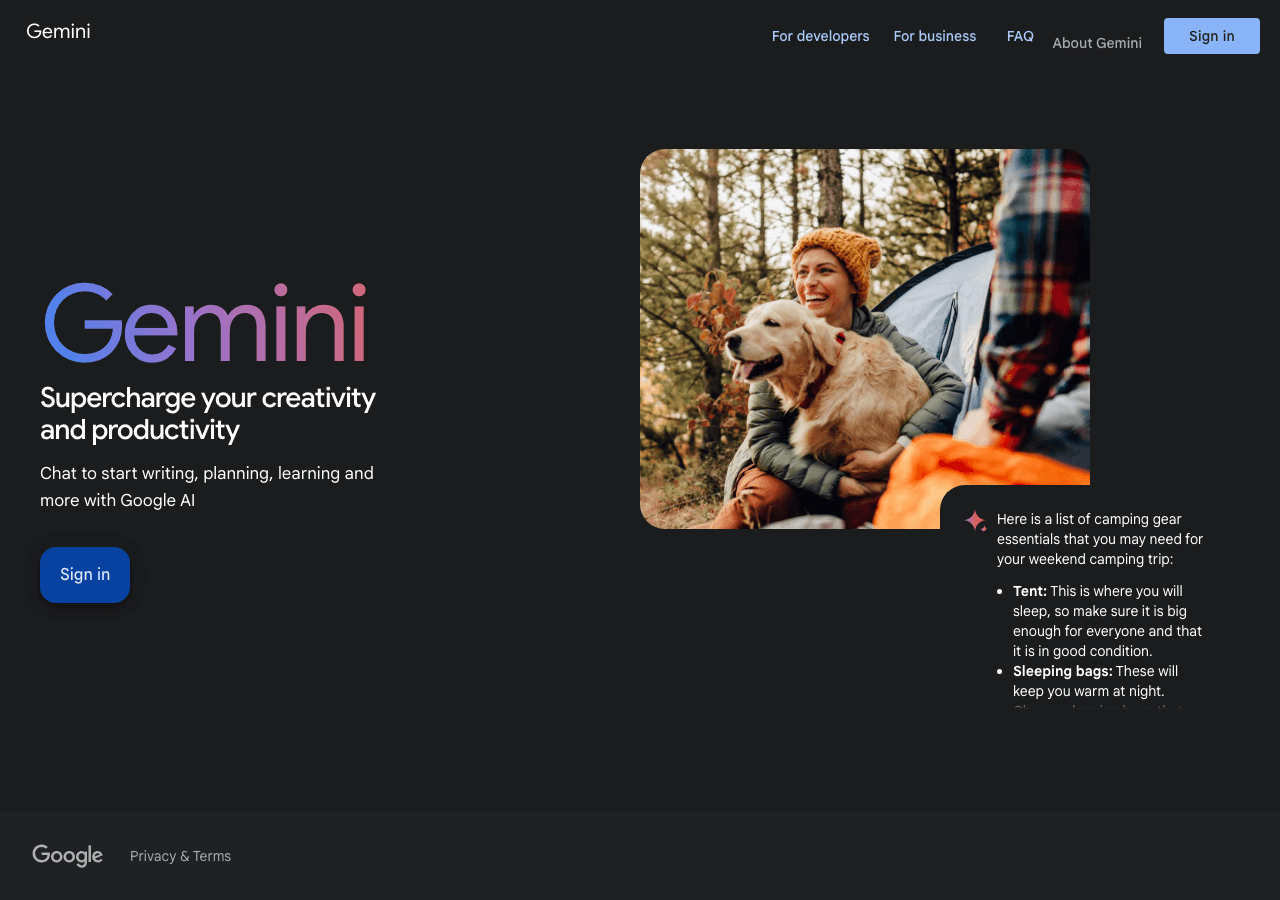
Your everyday Google AI assistant for creativity, research, and productivity
Gemini is Google's family of advanced multimodal AI models (including 2.5 Pro, 2.5 Flash, and experimental 3.0) and assistant, with superior reasoning, coding, math, and creative capabilities across text, images, audio, video, and code. Integrated in Google apps, Search, Workspace, and services for consumers and enterprises, it offers Deep Think mode, Gemini Live, file analysis, Canvas, agentic assistance, and premium plans like AI Ultra.

ChatGPT
AI research, productivity, and conversation—smarter thinking, deeper insights.
ChatGPT is an AI chatbot designed for everyday use, assisting users in obtaining answers, finding inspiration, and boosting productivity. It enables interaction with an advanced AI to explore ideas, s
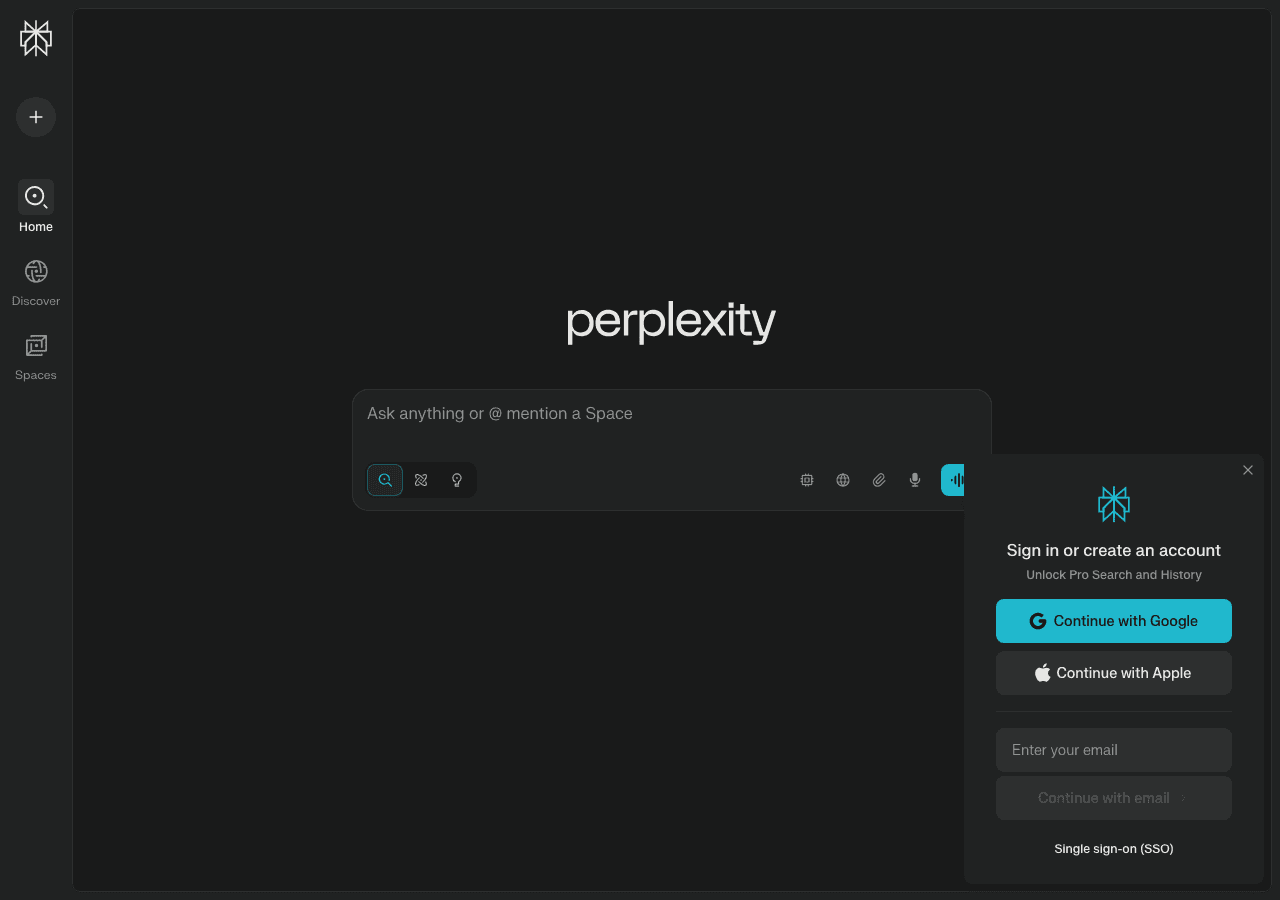
Perplexity
Clear answers from reliable sources, powered by AI.
Perplexity is an AI-powered answer engine that delivers real-time, source-cited responses by combining advanced language models with live web search. Key features include Deep Research for comprehensive reports, Copilot for guided exploration, Perplexity Labs for interactive reports, data analysis, code execution, and visualizations (since May 2025), Comet Browser, specialized focus modes (Academic, News, YouTube, Web, Pro-Search, Reasoning), multimodal processing (text, images, videos, documents, file uploads), collaborative Spaces, Shopping Hub, Finance tools, and integrated browser. Accessible via web and mobile apps with free and Pro/Enterprise plans.

Claude
Your trusted AI collaborator for coding, research, productivity, and enterprise challenges
Claude is a conversational AI, code assistance, and productivity solution for professionals and teams. It offers advanced reasoning capabilities, supports long-context workflows, provides safe agentic automation, and includes enterprise-grade security and governance features.
The AI that actually does things.
OpenClaw — Personal AI Assistant is openClaw is an AI personal assistant that automates tasks across platforms. It's designed for individuals seeking to delegate routine tasks. Key differentiators include its open-source nature and on-premise hosting. Category: Productivity & Collaboration, Code Assistance. Topics: ...
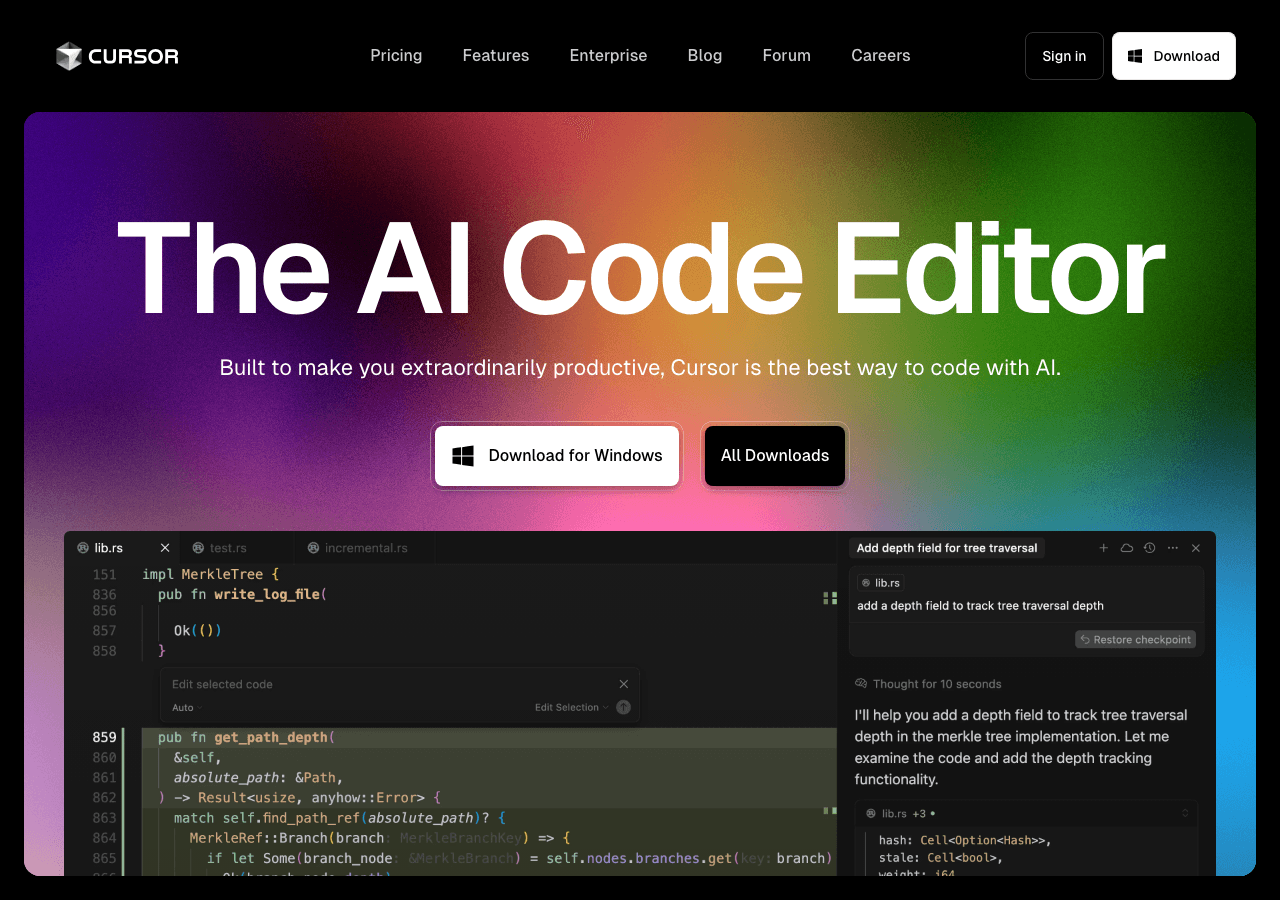
Cursor
The AI code editor that understands your entire codebase
Cursor is an AI-first code editor and IDE, forked from VS Code, with deeply integrated AI for intelligent code generation, refactoring, debugging, context-aware codebase chat, advanced tab autocomplete with multi-line predictions, Composer mode for multi-file edits, Agent mode with planning and PR workflows, Plan Mode, Rules, Slash Commands, Browser control, Hooks, Background Agents, own Composer model, support for models like GPT-4o, Claude 3.5 Sonnet, Gemini, xAI, image support, web search, customizable rules, full codebase understanding, real-time suggestions, AI Code Review, Instant Grep, and visual DOM editing—maximizing developer productivity.
DeepSeek
Efficient open-weight AI models for advanced reasoning and research
DeepSeek is a Chinese AI company founded in 2023 by Liang Wenfeng in Hangzhou, backed by High-Flyer hedge fund. It develops efficient open-weight large language models like DeepSeek-R1 (Jan 2025), DeepSeek-V3 (Dec 2024), and DeepSeek-V2, excelling in reasoning, multilingual tasks, and cost-effective training/inference despite US chip restrictions. Models use self-learning and reinforcement learning for competitive performance with fewer resources. All models and research are open-source, accessible via web, API, and apps. Note: Data collection (chats, files) sent to China servers raises GDPR/privacy concerns.
Google Antigravity - Build the new way
Google Antigravity - Build the new way IDE LIKE COURSOR AND WINDSURF

Tomorrow’s editor, today. The first agent-powered IDE built for developer flow.
Windsurf is an AI-native, agentic IDE (formerly Codeium) for developers, featuring Cascade for whole-codebase understanding with workflow rules in .windsurfrules, multi-file refactoring, automated cleanup, TypeScript error fixing, Supercomplete intent-aware autocomplete, Inline AI, image-to-code, live editor previews, Windsurf Tab for auto-imports and package suggestions, one-click deployments, AI terminal commands, Windsurf Browser with AI integration, web search, Figma integration, extensive model support (Claude 3.5 Sonnet, GPT-5-Codex, Gemini), privacy-first policies, VS Code/JetBrains plugins, and cross-platform compatibility (Mac, Windows, Linux) to maximize productivity via agentic automation and testable code changes.
Grok
Your cosmic AI guide for real-time discovery and creation
xAI builds Grok, an AI chatbot with voice chat, image and video generation, real-time search, and advanced reasoning. Try Grok at grok.com.
Suno AI
Empowering Your Data with AI
AI-powered music creation platform that enables users to generate original songs and music tracks from text descriptions, leveraging advanced models for dynamic audio, customizable features, and instant downloads—no musical experience required.
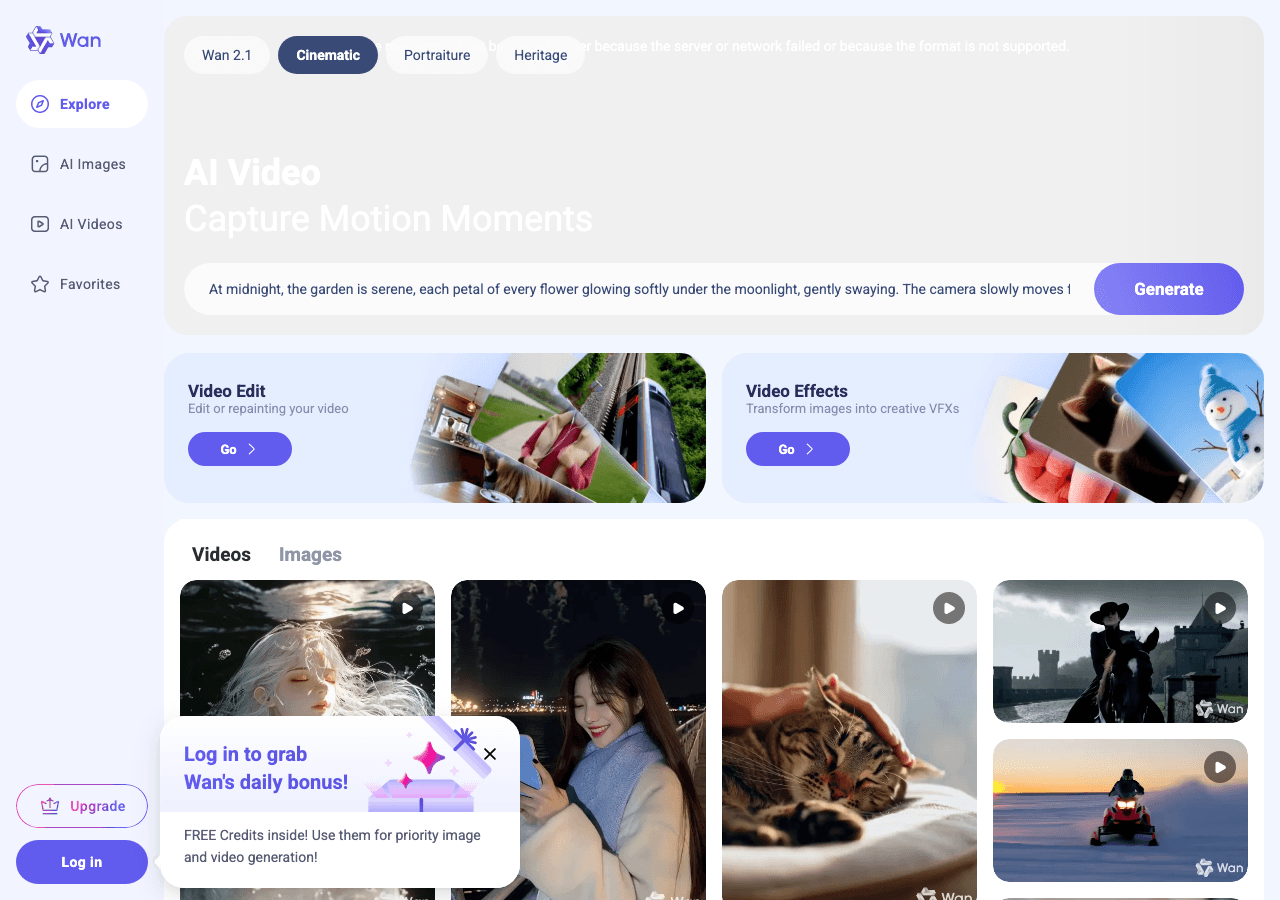
Wan
AI Video Creation. Realism. Audio. Control.
Wan is an AI creative platform. It aims to lower the barrier to creative work using artificial intelligence, offering features like text-to-image, image-to-image, text-to-video, image-to-video, and image editing.
Not seeing the right fit for AI Enthusiasts?
Describe your exact workflow and let the AI finder suggest tools beyond this shortlist.
Explore AI tool categories
FAQ
What are common AI workflows for AI Enthusiasts?
Spin up a prototype by combining text, image, and audio generation tools into a single demo. Benchmark frontier models against open datasets and visualize trade-offs in latency, cost, and accuracy. Automate experiment logging so you can publish reproducible project write-ups or streams. Use vector databases and RAG tooling to ground experiments with your personal knowledge base.
How do I choose the right AI tool for AI Enthusiasts?
Flexible pricing that keeps hobby experiments affordable while scaling during hackathons. Access to model customization—prompt engineering, lightweight fine-tuning, or plug-in architectures. Community features such as template sharing, leaderboards, or Discord integrations to gather feedback quickly. Export options that let you publish demos to GitHub, Hugging Face Spaces, or personal websites.
Are there free options for AI Enthusiasts?
Yes—many vendors offer free tiers or generous trials. Confirm usage limits, export rights, and upgrade triggers so you can scale without hidden costs.
How should I compare pricing for AI Enthusiasts tools?
Normalize plans to your usage, including seats, limits, overages, required add-ons, and support tiers. Capture implementation and training costs so your business case reflects the full investment.
What due diligence is essential before choosing tools for AI Enthusiasts?
Signal vs noise when dozens of tools promise “state-of-the-art”. Shortlist platforms with transparent changelogs, reproducible benchmarks, and open APIs so you can verify claims yourself. Managing compute costs when experimenting with large models. Favor tools that support tiered usage, GPU sharing, or on-demand credits so you never leave experiments running idle. Sharing projects without exposing API keys or private data. Use staging environments and secrets managers. Many enthusiast platforms now sandbox keys or provide temporary demo tokens.
How do we roll AI out to the entire ai enthusiasts team?
Adopt a weekly experiment cadence. Document what worked, what failed, and what the community responded to. Publish lightweight retros so collaborators can build on your learnings. Treat each proof-of-concept as an asset—tag, archive, and revisit when new models emerge.
Which metrics prove AI is delivering ROI?
Prototype-to-publication cycle time. Community engagement (stars, forks, discussions) on shared experiments. Cost per experiment versus the insights generated. Number of reusable components (prompts, datasets, pipelines) in your personal library.
Any advanced strategies once the basics are working?
Treat your experiment log like a changelog. Tag experiments by modality, task, and outcome so you can resurface the right approach when a collaborator asks for guidance.
High-Impact Workflows You Can Automate Today
- Spin up a prototype by combining text, image, and audio generation tools into a single demo.
- Benchmark frontier models against open datasets and visualize trade-offs in latency, cost, and accuracy.
- Automate experiment logging so you can publish reproducible project write-ups or streams.
- Use vector databases and RAG tooling to ground experiments with your personal knowledge base.
Tool Selection Framework for AI Enthusiasts
Use this checklist when evaluating new platforms so every trial aligns with your workflow, governance, and budget realities:
- Flexible pricing that keeps hobby experiments affordable while scaling during hackathons.
- Access to model customization—prompt engineering, lightweight fine-tuning, or plug-in architectures.
- Community features such as template sharing, leaderboards, or Discord integrations to gather feedback quickly.
- Export options that let you publish demos to GitHub, Hugging Face Spaces, or personal websites.
Challenges & Risk Mitigation
Signal vs noise when dozens of tools promise “state-of-the-art”.
Managing compute costs when experimenting with large models.
Sharing projects without exposing API keys or private data.
Adoption & Change Management Playbook
Adopt a weekly experiment cadence. Document what worked, what failed, and what the community responded to. Publish lightweight retros so collaborators can build on your learnings. Treat each proof-of-concept as an asset—tag, archive, and revisit when new models emerge.
Success Metrics to Track
- Prototype-to-publication cycle time.
- Community engagement (stars, forks, discussions) on shared experiments.
- Cost per experiment versus the insights generated.
- Number of reusable components (prompts, datasets, pipelines) in your personal library.
Collaboration Tips & Advanced Strategies
- Pair with domain experts to test use cases outside your comfort zone.
- Join research sprints or hackathons to stress-test your process under time pressure.
- Stream or blog your experiments—the feedback loop reveals blind spots early.
Pro move
Treat your experiment log like a changelog. Tag experiments by modality, task, and outcome so you can resurface the right approach when a collaborator asks for guidance.