AI Tools for Scientists
Explore 562 curated AI tools for Scientists, organized around real workflows, selection criteria, and practical adoption risks.
Researchers need AI that can ingest literature, crunch data, and surface reproducible insights. The right toolkit speeds the journey from hypothesis to peer-reviewed findings while preserving scientific rigor.
Research output doubles every few years. Without AI, staying current requires unsustainable manual screening. AI literature miners, automated statistics, and lab notebook assistants help teams validate hypotheses faster and share results confidently.


Community leaders
ChatGPT · Perplexity · Claude
Start with your workflow
Pick a task to open an AI-assisted recommendation prompt, then compare tools once you have a shortlist.
systematic literature reviews by clustering papers,...
Build systematic literature reviews by clustering papers, extracting key findings, and identifying gaps.
Ask AI Finderdata cleaning, outlier detection, and statistical a...
Automate data cleaning, outlier detection, and statistical analysis pipelines for lab results.
Ask AI FinderTranslate natural language hypotheses into simulati...
Translate natural language hypotheses into simulation scripts or experiment protocols.
Ask AI FinderSummarize experimental logs into figures and narrat...
Summarize experimental logs into figures and narratives suitable for publication drafts.
Ask AI FinderShowing 12 of 562 AI tools for Scientists

ChatGPT
AI research, productivity, and conversation—smarter thinking, deeper insights.
ChatGPT is an AI chatbot designed for everyday use, assisting users in obtaining answers, finding inspiration, and boosting productivity. It enables interaction with an advanced AI to explore ideas, s
Perplexity
Clear answers from reliable sources, powered by AI.
Perplexity is an AI-powered answer engine that delivers real-time, source-cited responses by combining advanced language models with live web search. Key features include Deep Research for comprehensive reports, Copilot for guided exploration, Perplexity Labs for interactive reports, data analysis, code execution, and visualizations (since May 2025), Comet Browser, specialized focus modes (Academic, News, YouTube, Web, Pro-Search, Reasoning), multimodal processing (text, images, videos, documents, file uploads), collaborative Spaces, Shopping Hub, Finance tools, and integrated browser. Accessible via web and mobile apps with free and Pro/Enterprise plans.

Claude
Your trusted AI collaborator for coding, research, productivity, and enterprise challenges
Claude is a conversational AI, code assistance, and productivity solution for professionals and teams. It offers advanced reasoning capabilities, supports long-context workflows, provides safe agentic automation, and includes enterprise-grade security and governance features.
The AI that actually does things.
OpenClaw — Personal AI Assistant is openClaw is an AI personal assistant that automates tasks across platforms. It's designed for individuals seeking to delegate routine tasks. Key differentiators include its open-source nature and on-premise hosting. Category: Productivity & Collaboration, Code Assistance. Topics: ...
DeepSeek
Efficient open-weight AI models for advanced reasoning and research
DeepSeek is a Chinese AI company founded in 2023 by Liang Wenfeng in Hangzhou, backed by High-Flyer hedge fund. It develops efficient open-weight large language models like DeepSeek-R1 (Jan 2025), DeepSeek-V3 (Dec 2024), and DeepSeek-V2, excelling in reasoning, multilingual tasks, and cost-effective training/inference despite US chip restrictions. Models use self-learning and reinforcement learning for competitive performance with fewer resources. All models and research are open-source, accessible via web, API, and apps. Note: Data collection (chats, files) sent to China servers raises GDPR/privacy concerns.
Grok
Your cosmic AI guide for real-time discovery and creation
xAI builds Grok, an AI chatbot with voice chat, image and video generation, real-time search, and advanced reasoning. Try Grok at grok.com.
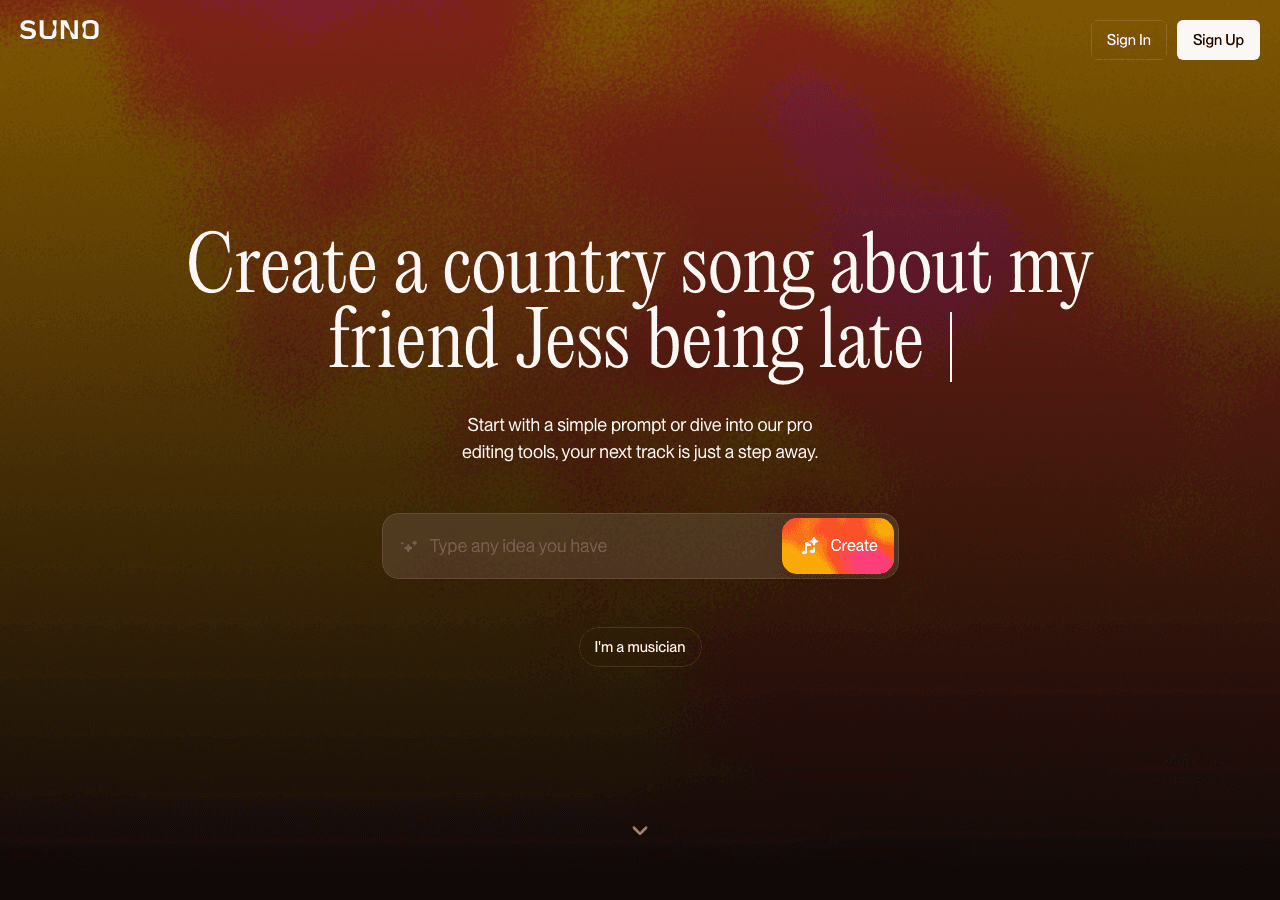
Suno AI
Empowering Your Data with AI
AI-powered music creation platform that enables users to generate original songs and music tracks from text descriptions, leveraging advanced models for dynamic audio, customizable features, and instant downloads—no musical experience required.

Notebook LLM
Turn complexity into clarity with your AI-powered research and thinking partner
AI research tool and thinking partner that analyzes sources, turns complexity into clarity, and transforms content into study aids, overviews, and reports
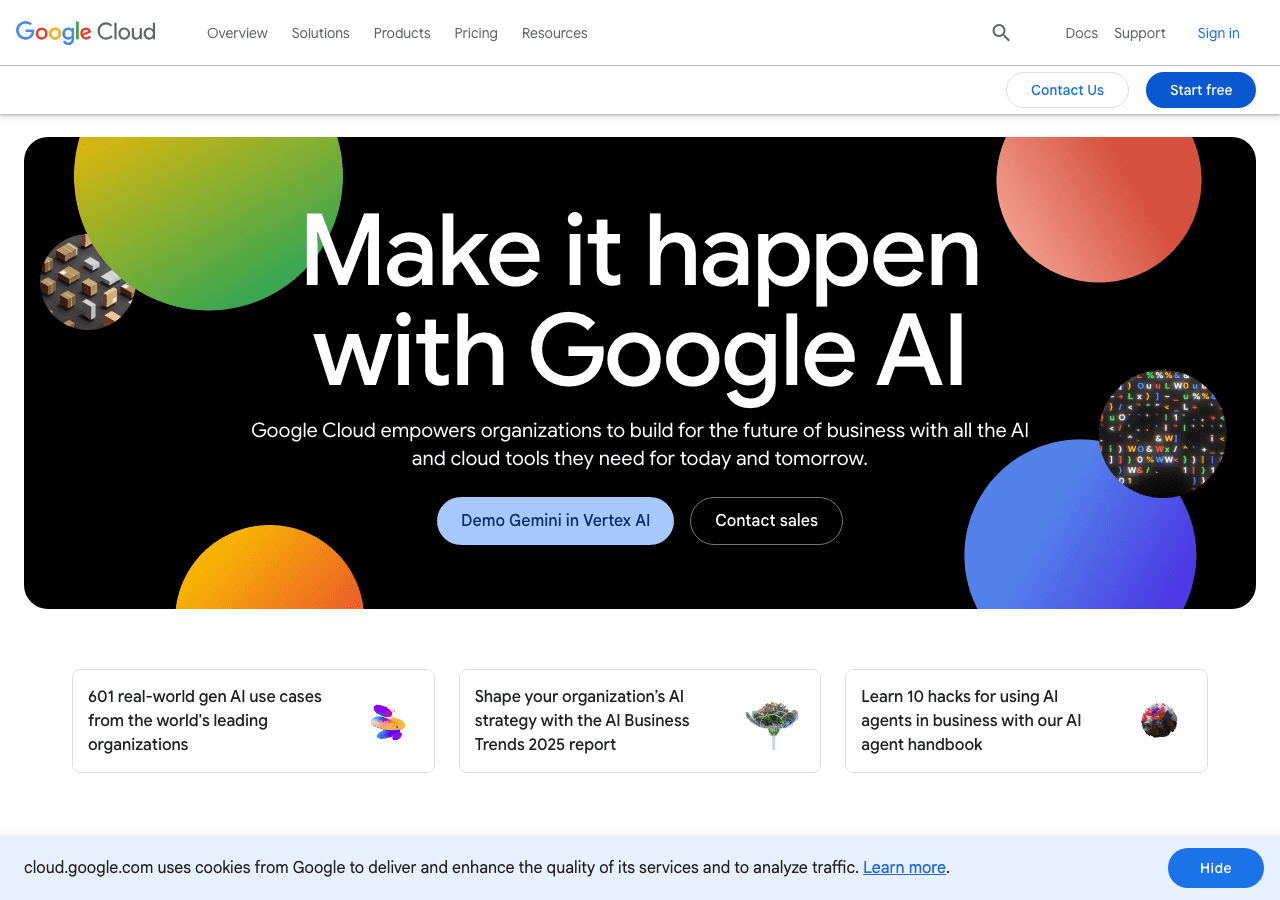
Gemini, Vertex AI, and AI infrastructure—everything you need to build and scale enterprise AI on Google Cloud.
Google Cloud AI is the integrated AI portfolio on Google Cloud that brings together Gemini models, Vertex AI, AI infrastructure, and AI-powered applications. It offers access to Google’s latest Gemini family and other proprietary, third‑party, and open‑source models via Vertex AI, tools like Vertex AI Studio and Agent Builder for building agents and apps, Model Garden and extensions for real‑time data and actions, enterprise‑grade MLOps, security and governance, and high‑performance GPU, TPU, and custom AI chips to run multimodal AI (text, image, video, audio, code) at scale across the cloud.
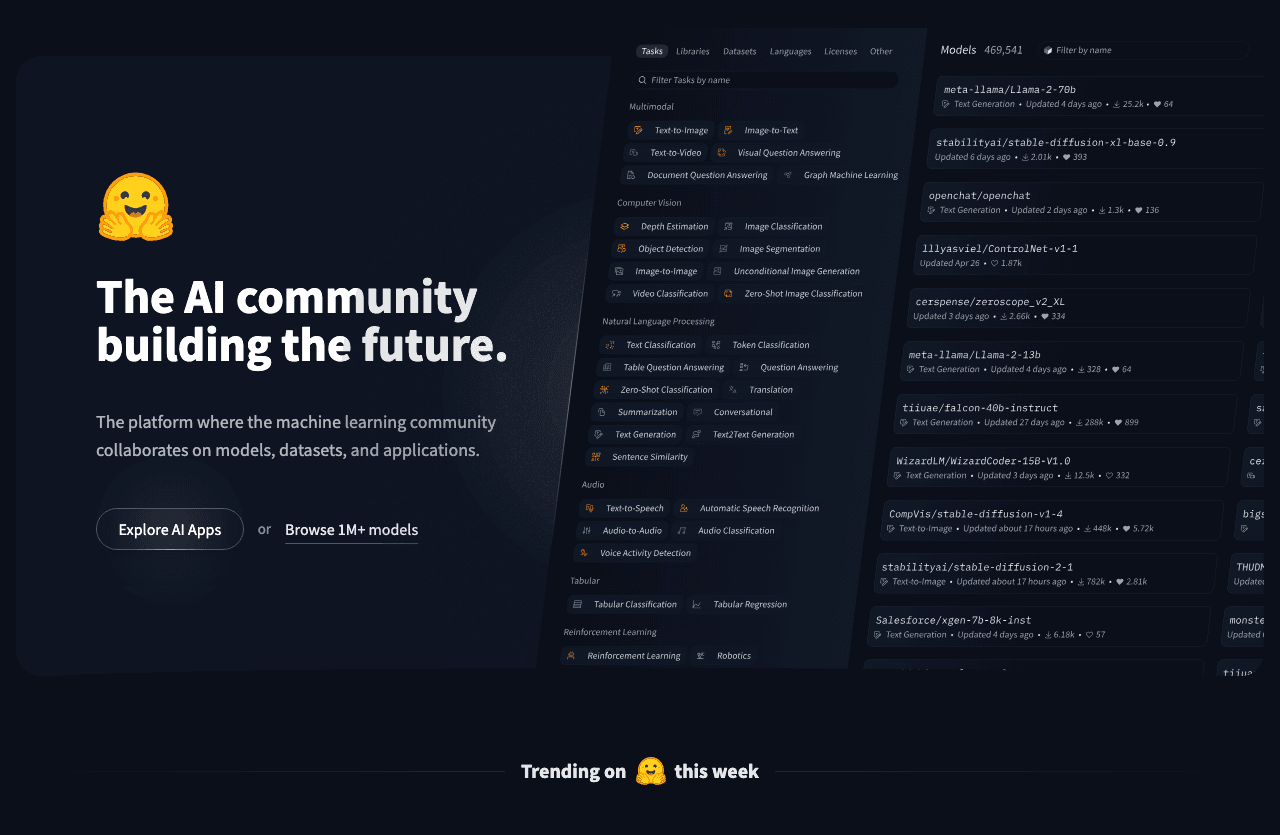
Hugging Face
Democratizing good machine learning, one commit at a time.
Hugging Face is a collaborative, community-driven company and open-source platform that provides tools, pre-trained models, datasets, and infrastructure for building, training, and deploying machine learning applications. Its offerings span natural language processing, computer vision, generative AI, multimodal models, and large language models, and include the popular Transformers library, the Hugging Face Hub for hosting models, datasets, and apps, and managed enterprise solutions for production deployments across industries.

Enterprise-grade AI and ML, from data to deployment
Azure Machine Learning is a fully managed, cloud-based AI and machine learning platform that lets you build, train, evaluate, and deploy models using code-first or low‑code tools. It supports data preparation, experiment tracking, automated and generative AI, responsible AI, MLOps, and scalable deployment to the cloud or edge, with enterprise-grade security, governance, and deep integration with other Azure services and data platforms.
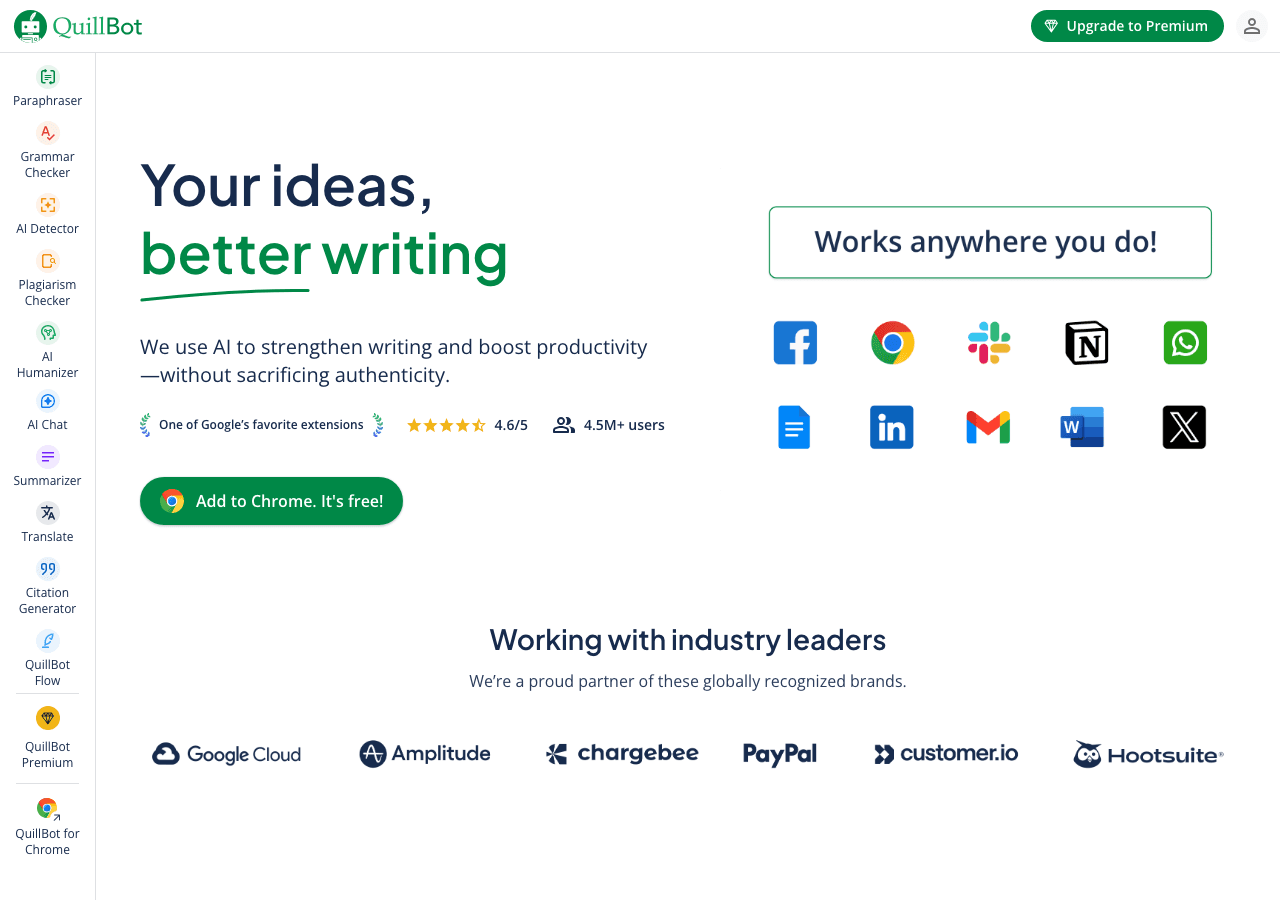
QuillBot
Your all-in-one AI writing assistant
AI-powered writing assistant offering paraphrasing with eight modes (Standard, Formal, Academic, Simple, Creative, Expand, Shorten, Personalized), grammar and spelling checks, text summarization, plagiarism detection, AI detection and humanization, citation generation, translation, AI chat for research and ideation, Co-Writer integrated editor, mobile keyboard support, Chrome extension, and apps for macOS, iPhone, and Android for enhanced writing productivity across platforms.
Not seeing the right fit for Scientists?
Describe your exact workflow and let the AI finder suggest tools beyond this shortlist.
Explore AI tool categories
FAQ
What are common AI workflows for Scientists?
Build systematic literature reviews by clustering papers, extracting key findings, and identifying gaps. Automate data cleaning, outlier detection, and statistical analysis pipelines for lab results. Translate natural language hypotheses into simulation scripts or experiment protocols. Summarize experimental logs into figures and narratives suitable for publication drafts.
How do I choose the right AI tool for Scientists?
Support for scientific file formats (CSV, HDF5, FASTA, microscopy images) and domain ontologies. Audit trails that capture datasets, parameters, and versions for reproducibility. Compliance with institutional review boards, HIPAA/GDPR, or grant data management plans. Ability to export artifacts into Jupyter, RStudio, or lab information management systems.
Are there free options for Scientists?
Yes—many vendors offer free tiers or generous trials. Confirm usage limits, export rights, and upgrade triggers so you can scale without hidden costs.
How should I compare pricing for Scientists tools?
Normalize plans to your usage, including seats, limits, overages, required add-ons, and support tiers. Capture implementation and training costs so your business case reflects the full investment.
What due diligence is essential before choosing tools for Scientists?
AI hallucinations when summarizing complex studies. Favor tools that cite sources, highlight uncertainty, and allow quick cross-checks against original PDFs or datasets. Data provenance issues when combining public datasets with proprietary lab results. Use platforms with lineage tracking, access controls, and clear licensing metadata. Resistance from peer reviewers wary of AI-generated content. Maintain human oversight—use AI for drafts but have researchers verify every claim and keep lab notebooks AI-augmented rather than AI-authored.
How do we roll AI out to the entire scientists team?
Start by automating tedious steps—citation gathering, figure generation, or exploratory statistics. Once teams trust the outputs, integrate AI into protocol design and ongoing monitoring. Pair scientists with data engineers to productionize successful pipelines.
Which metrics prove AI is delivering ROI?
Time spent on literature review and data preparation. Number of experiments run per quarter with reproducible documentation. Grant or publication throughput attributable to AI-assisted workflows. Reduction in manual errors or retractions due to poor data hygiene.
Any advanced strategies once the basics are working?
Use embeddings to build a private discovery portal that links lab notes, datasets, and publications, giving your team a personalized semantic search engine.
High-Impact Workflows You Can Automate Today
- Build systematic literature reviews by clustering papers, extracting key findings, and identifying gaps.
- Automate data cleaning, outlier detection, and statistical analysis pipelines for lab results.
- Translate natural language hypotheses into simulation scripts or experiment protocols.
- Summarize experimental logs into figures and narratives suitable for publication drafts.
Tool Selection Framework for Scientists
Use this checklist when evaluating new platforms so every trial aligns with your workflow, governance, and budget realities:
- Support for scientific file formats (CSV, HDF5, FASTA, microscopy images) and domain ontologies.
- Audit trails that capture datasets, parameters, and versions for reproducibility.
- Compliance with institutional review boards, HIPAA/GDPR, or grant data management plans.
- Ability to export artifacts into Jupyter, RStudio, or lab information management systems.
Challenges & Risk Mitigation
AI hallucinations when summarizing complex studies.
Data provenance issues when combining public datasets with proprietary lab results.
Resistance from peer reviewers wary of AI-generated content.
Adoption & Change Management Playbook
Start by automating tedious steps—citation gathering, figure generation, or exploratory statistics. Once teams trust the outputs, integrate AI into protocol design and ongoing monitoring. Pair scientists with data engineers to productionize successful pipelines.
Success Metrics to Track
- Time spent on literature review and data preparation.
- Number of experiments run per quarter with reproducible documentation.
- Grant or publication throughput attributable to AI-assisted workflows.
- Reduction in manual errors or retractions due to poor data hygiene.
Collaboration Tips & Advanced Strategies
- Invite librarians or knowledge managers to curate approved sources and ontologies.
- Share AI-generated cheatsheets with collaborators to align on methodologies quickly.
- Host quarterly retros to capture research insights and feed templates back into the tool stack.
Pro move
Use embeddings to build a private discovery portal that links lab notes, datasets, and publications, giving your team a personalized semantic search engine.