AI Tools for Product Managers
Explore 1234 curated AI tools for Product Managers, organized around real workflows, selection criteria, and practical adoption risks.
Product leaders orchestrate research, prioritization, and delivery. AI copilots synthesize signals from users, stakeholders, and telemetry so you can make confident roadmap decisions.
Customer feedback pours in across channels. Without AI, triaging insights and aligning cross-functional teams becomes guesswork. AI helps PMs surface patterns, draft specs, and communicate trade-offs transparently.


Community leaders
Google Gemini · ChatGPT · Perplexity
Start with your workflow
Pick a task to open an AI-assisted recommendation prompt, then compare tools once you have a shortlist.
Cluster qualitative feedback from support tickets, ...
Cluster qualitative feedback from support tickets, reviews, and interviews into actionable themes.
Ask AI Finderproduct requirements with context from telemetry, p...
Draft product requirements with context from telemetry, personas, and business goals.
Ask AI FinderSimulate roadmap scenarios by modeling capacity, im...
Simulate roadmap scenarios by modeling capacity, impact, and dependencies.
Ask AI FinderMonitor release health by combining product analyti...
Monitor release health by combining product analytics with user sentiment.
Ask AI FinderShowing 12 of 1,234 AI tools for Product Managers

Your everyday Google AI assistant for creativity, research, and productivity
Gemini is Google's family of advanced multimodal AI models (including 2.5 Pro, 2.5 Flash, and experimental 3.0) and assistant, with superior reasoning, coding, math, and creative capabilities across text, images, audio, video, and code. Integrated in Google apps, Search, Workspace, and services for consumers and enterprises, it offers Deep Think mode, Gemini Live, file analysis, Canvas, agentic assistance, and premium plans like AI Ultra.

ChatGPT
AI research, productivity, and conversation—smarter thinking, deeper insights.
ChatGPT is an AI chatbot designed for everyday use, assisting users in obtaining answers, finding inspiration, and boosting productivity. It enables interaction with an advanced AI to explore ideas, s
Perplexity
Clear answers from reliable sources, powered by AI.
Perplexity is an AI-powered answer engine that delivers real-time, source-cited responses by combining advanced language models with live web search. Key features include Deep Research for comprehensive reports, Copilot for guided exploration, Perplexity Labs for interactive reports, data analysis, code execution, and visualizations (since May 2025), Comet Browser, specialized focus modes (Academic, News, YouTube, Web, Pro-Search, Reasoning), multimodal processing (text, images, videos, documents, file uploads), collaborative Spaces, Shopping Hub, Finance tools, and integrated browser. Accessible via web and mobile apps with free and Pro/Enterprise plans.

Claude
Your trusted AI collaborator for coding, research, productivity, and enterprise challenges
Claude is a conversational AI, code assistance, and productivity solution for professionals and teams. It offers advanced reasoning capabilities, supports long-context workflows, provides safe agentic automation, and includes enterprise-grade security and governance features.
The AI that actually does things.
OpenClaw — Personal AI Assistant is openClaw is an AI personal assistant that automates tasks across platforms. It's designed for individuals seeking to delegate routine tasks. Key differentiators include its open-source nature and on-premise hosting. Category: Productivity & Collaboration, Code Assistance. Topics: ...
DeepSeek
Efficient open-weight AI models for advanced reasoning and research
DeepSeek is a Chinese AI company founded in 2023 by Liang Wenfeng in Hangzhou, backed by High-Flyer hedge fund. It develops efficient open-weight large language models like DeepSeek-R1 (Jan 2025), DeepSeek-V3 (Dec 2024), and DeepSeek-V2, excelling in reasoning, multilingual tasks, and cost-effective training/inference despite US chip restrictions. Models use self-learning and reinforcement learning for competitive performance with fewer resources. All models and research are open-source, accessible via web, API, and apps. Note: Data collection (chats, files) sent to China servers raises GDPR/privacy concerns.
n8n
Open-source workflow automation with native AI
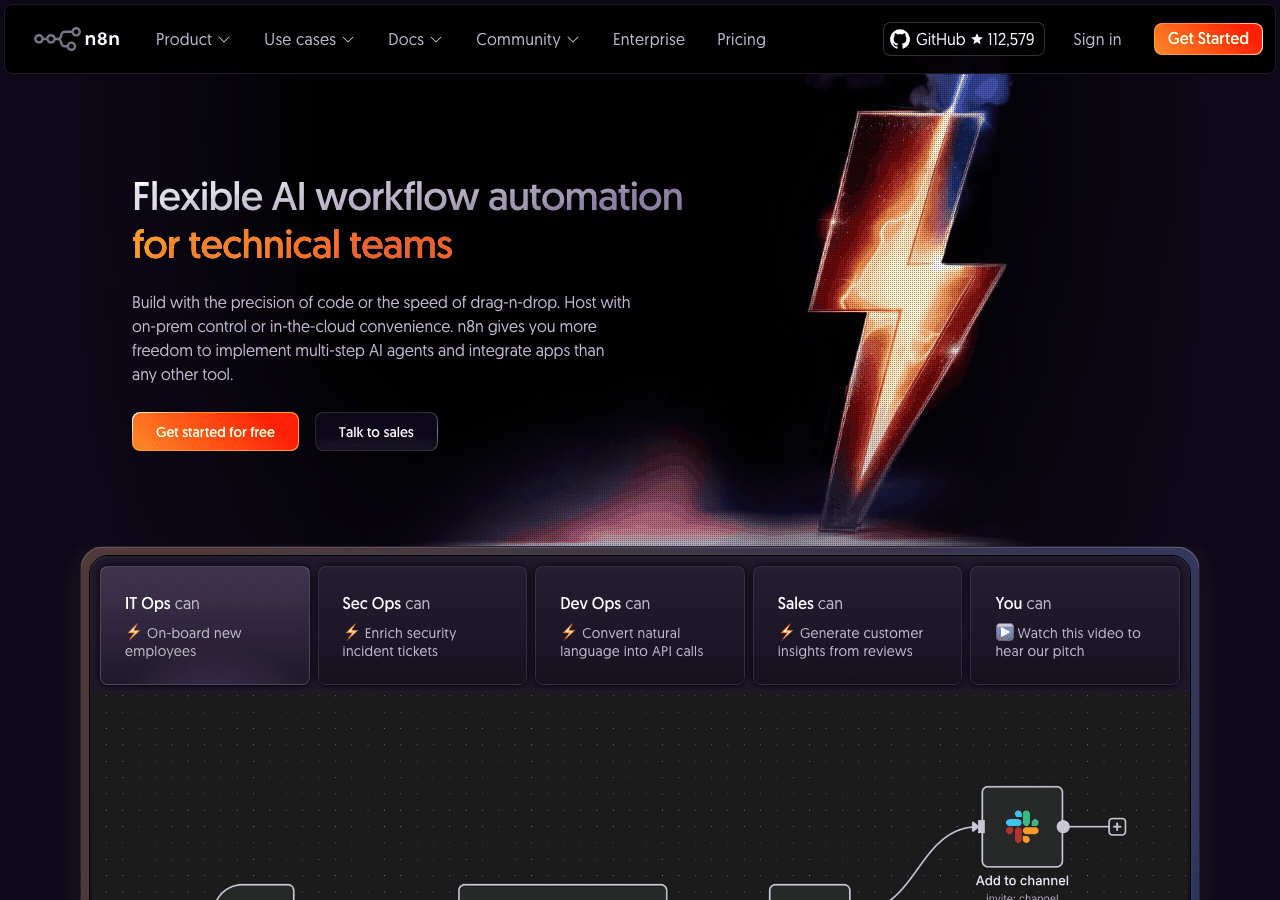
n8n is a flexible, open-source workflow automation platform for technical teams. It features a visual drag-and-drop editor with JavaScript/Python code nodes, 500+ integrations, 1700+ community templates, self-hosting, enterprise security (RBAC, SSO, SAML, LDAP, audit logs), native AI workflows with agents supporting OpenAI, Anthropic Claude, Google Gemini, Hugging Face, Langchain-based multi-agent systems, RAG, advanced debugging (inline logs, data replay), real-time visualization, performance insights, Git control, and scalability up to 220 executions/second. Version 2.0 adds autosave, modern canvas, and optimizations.
Grok
Your cosmic AI guide for real-time discovery and creation
xAI builds Grok, an AI chatbot with voice chat, image and video generation, real-time search, and advanced reasoning. Try Grok at grok.com.
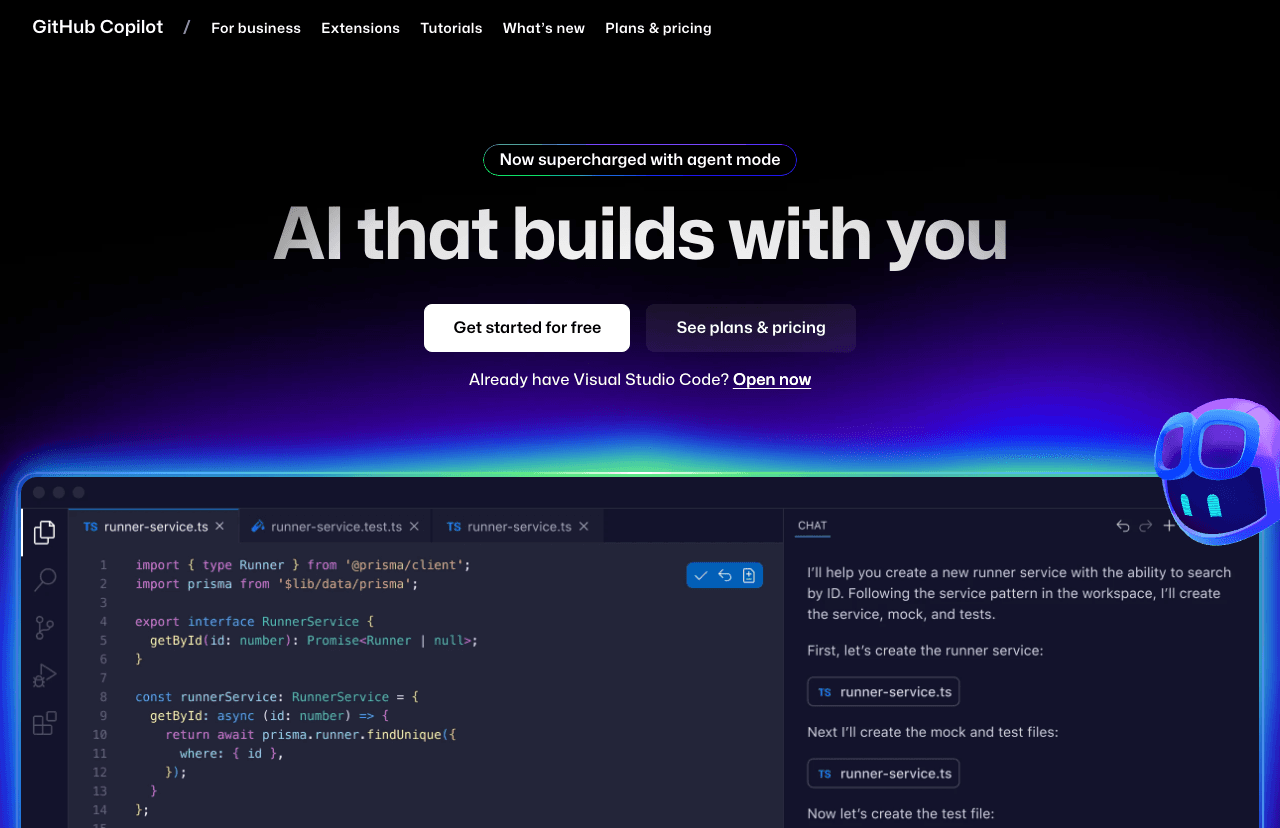
Your AI pair programmer and autonomous coding agent
GitHub Copilot is an AI-powered coding assistant and autonomous agent that integrates directly in IDEs (VS Code, Visual Studio, JetBrains, Xcode, Eclipse, Vim/Neovim) and the cloud. It provides code completions, next edit predictions, inline chat, multi-file editing, intelligent actions for tests/docs/fixes, and agent mode for handling issues, pull requests, refactoring, app modernization (.NET/Java), error fixing, test coverage, and multi-step workflows. New 2025 features include Copilot Free tier, enhanced agent with MCP integration, custom agents for workflows (CI/CD, security), open-sourced chat extension, and support for 15M+ developers.[1][2][3][4][5][6]
Notion AI
The all-in-one AI workspace that takes notes, searches apps, and builds workflows where you work.
Notion AI is a deeply integrated artificial intelligence assistant within the Notion workspace, available for Business and Enterprise plans in 2025. It leverages multiple leading LLMs, including GPT-4 and Claude, to provide contextual writing, editing, summarizing, multilingual translation, brainstorming, and automation. Key 2025 features include enterprise-level search across connected apps (e.g. Slack, Google Drive), native chat integration, AI-powered meeting notes, research mode for auto-generated documents, advanced database properties for summaries and tags, web search connectivity, and improved team workflow and knowledge management through intelligent agents. Notion AI is not available for Free or Plus plans.
Suno AI
Empowering Your Data with AI
AI-powered music creation platform that enables users to generate original songs and music tracks from text descriptions, leveraging advanced models for dynamic audio, customizable features, and instant downloads—no musical experience required.
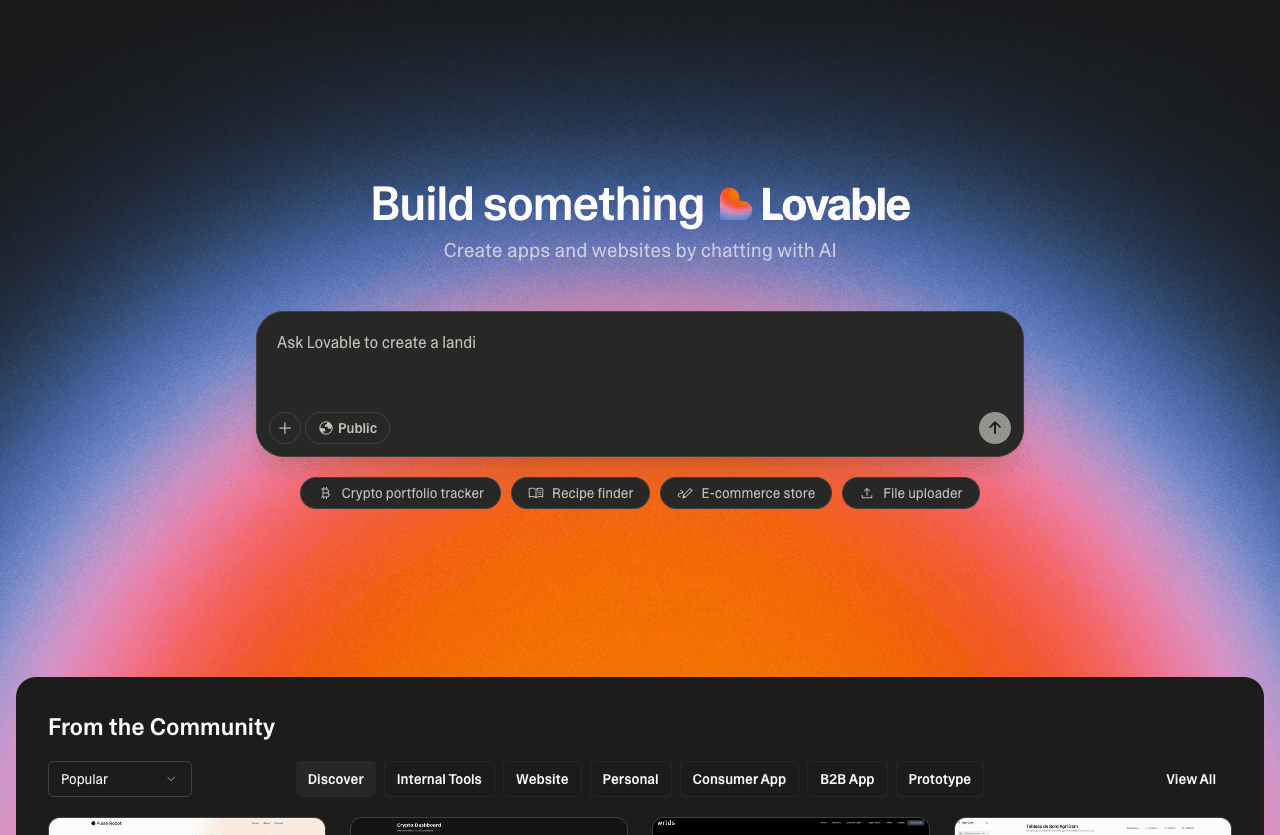
Lovable
Build full-stack apps from plain English
Build apps, websites, and digital products faster using Lovable’s no-code and AI-powered platform, no deep coding skills required.
Not seeing the right fit for Product Managers?
Describe your exact workflow and let the AI finder suggest tools beyond this shortlist.
Explore AI tool categories
FAQ
What are common AI workflows for Product Managers?
Cluster qualitative feedback from support tickets, reviews, and interviews into actionable themes. Draft product requirements with context from telemetry, personas, and business goals. Simulate roadmap scenarios by modeling capacity, impact, and dependencies. Monitor release health by combining product analytics with user sentiment.
How do I choose the right AI tool for Product Managers?
Integrations with Jira, Linear, Notion, Slack, and analytics stacks. Ability to ingest voice-of-customer data securely (surveys, Gong calls, community threads). Support for decision frameworks like RICE, MoSCoW, or opportunity solution trees. Collaboration features so design, engineering, and executives can comment in context.
Are there free options for Product Managers?
Yes—many vendors offer free tiers or generous trials. Confirm usage limits, export rights, and upgrade triggers so you can scale without hidden costs.
How should I compare pricing for Product Managers tools?
Normalize plans to your usage, including seats, limits, overages, required add-ons, and support tiers. Capture implementation and training costs so your business case reflects the full investment.
What due diligence is essential before choosing tools for Product Managers?
AI over-indexing on noisy feedback. Weight insights by customer segment, plan tier, or strategic priority before feeding them into models. Stakeholder skepticism of machine-generated prioritization. Expose the decision criteria, show alternatives, and keep humans in the loop for final calls. Maintaining a single source of truth across tools. Choose platforms that sync with existing workspaces rather than creating yet another silo.
How do we roll AI out to the entire product managers team?
Begin with backlog grooming. Let AI summarize requests and suggest themes while PMs validate. Expand to spec drafting and roadmap reviews. Share wins with leadership—faster alignment, fewer redundant meetings, and clearer release notes.
Which metrics prove AI is delivering ROI?
Cycle time from insight to roadmap decision. Stakeholder satisfaction with prioritization transparency. Reduction in duplicate feature requests or meeting load. Launch outcomes tied to AI-supported decisions (adoption, NPS).
Any advanced strategies once the basics are working?
Feed AI victory and failure postmortems to refine future prioritization suggestions and highlight patterns you might miss.
High-Impact Workflows You Can Automate Today
- Cluster qualitative feedback from support tickets, reviews, and interviews into actionable themes.
- Draft product requirements with context from telemetry, personas, and business goals.
- Simulate roadmap scenarios by modeling capacity, impact, and dependencies.
- Monitor release health by combining product analytics with user sentiment.
Tool Selection Framework for Product Managers
Use this checklist when evaluating new platforms so every trial aligns with your workflow, governance, and budget realities:
- Integrations with Jira, Linear, Notion, Slack, and analytics stacks.
- Ability to ingest voice-of-customer data securely (surveys, Gong calls, community threads).
- Support for decision frameworks like RICE, MoSCoW, or opportunity solution trees.
- Collaboration features so design, engineering, and executives can comment in context.
Challenges & Risk Mitigation
AI over-indexing on noisy feedback.
Stakeholder skepticism of machine-generated prioritization.
Maintaining a single source of truth across tools.
Adoption & Change Management Playbook
Begin with backlog grooming. Let AI summarize requests and suggest themes while PMs validate. Expand to spec drafting and roadmap reviews. Share wins with leadership—faster alignment, fewer redundant meetings, and clearer release notes.
Success Metrics to Track
- Cycle time from insight to roadmap decision.
- Stakeholder satisfaction with prioritization transparency.
- Reduction in duplicate feature requests or meeting load.
- Launch outcomes tied to AI-supported decisions (adoption, NPS).
Collaboration Tips & Advanced Strategies
- Invite design and engineering to co-create prompts for discovery interviews.
- Automate weekly digests for executives summarizing product signals.
- Store approved prompts and templates in a shared product operations hub.
Pro move
Feed AI victory and failure postmortems to refine future prioritization suggestions and highlight patterns you might miss.